Sourcing Guides · 2026 · 11 min read
Alibaba has millions of suppliers, but only a fraction are reliable factories. This 2026 guide shows you exactly how to filter, verify, sample, and pay safely, plus when to use a sourcing agent instead.
- Yes with Verified + Trade Assurance suppliers.
- Manufacturer for custom and volume; good traders are fine for mixed small lots.
- 5?8 with the same RFQ is the sweet spot: enough to benchmark prices and test responsiveness, few enough to actually evaluate the replies.
The buyers who lose money on Alibaba are almost never scammed by geniuses. They skip verification steps that take days and cost almost nothing, because the listing looked good and the price was right. This guide is the full verification routine, in the order you should run it: filters first, credentials second, communication third, samples fourth, factory proof fifth, payment structure last. Each step eliminates a specific class of bad supplier, and each class of bad supplier has cost someone reading this guide a deposit.
Why Alibaba still works in 2026
Alibaba remains the world’s largest B2B marketplace with 100,000+ active suppliers across electronics, home goods, fashion, toys, and more. For Amazon FBA sellers, Shopify brands, and wholesale importers, it is still the fastest place to discover factories, compare prices, and request samples.
The problem is noise: trading companies posing as factories, fake certifications, and copy-paste listings. The buyers who win in 2026 are not the ones who find the cheapest listing, they are the ones who verify fastest. Verification speed is a skill, and like any skill it runs on a checklist rather than intuition. The steps below are that checklist.
How do you find reliable suppliers on Alibaba, step by step?
Step 1: Use search filters correctly
Never buy from page-one results without filtering. The filters are not decoration, each one removes a specific failure mode. Apply these first:
- Trade Assurance, only suppliers who accept buyer protection. Removes suppliers who want payment outside any accountability system.
- Verified Supplier, audited on-site by a third-party inspection firm. Removes the pure middlemen with no office and no factory.
- Years in business: 5+, removes shell accounts and pop-up resellers.
- Response rate 90%+ and on-time delivery 95%+, removes suppliers who disappear mid-order or ship late as a habit.
- Transactions 100+ / $500k+, removes accounts with no proven export history.
Then sort by Transaction Level, not price. The cheapest listing is almost always a trading company or a quality risk, the seller who wins on price alone has usually won by cutting something you cannot see in a photograph: material grade, gauge, tolerance, or QC. Price sorts find you the bottom of the market; transaction levels sort toward the reliable middle of it.
Step 2: Check supplier credentials
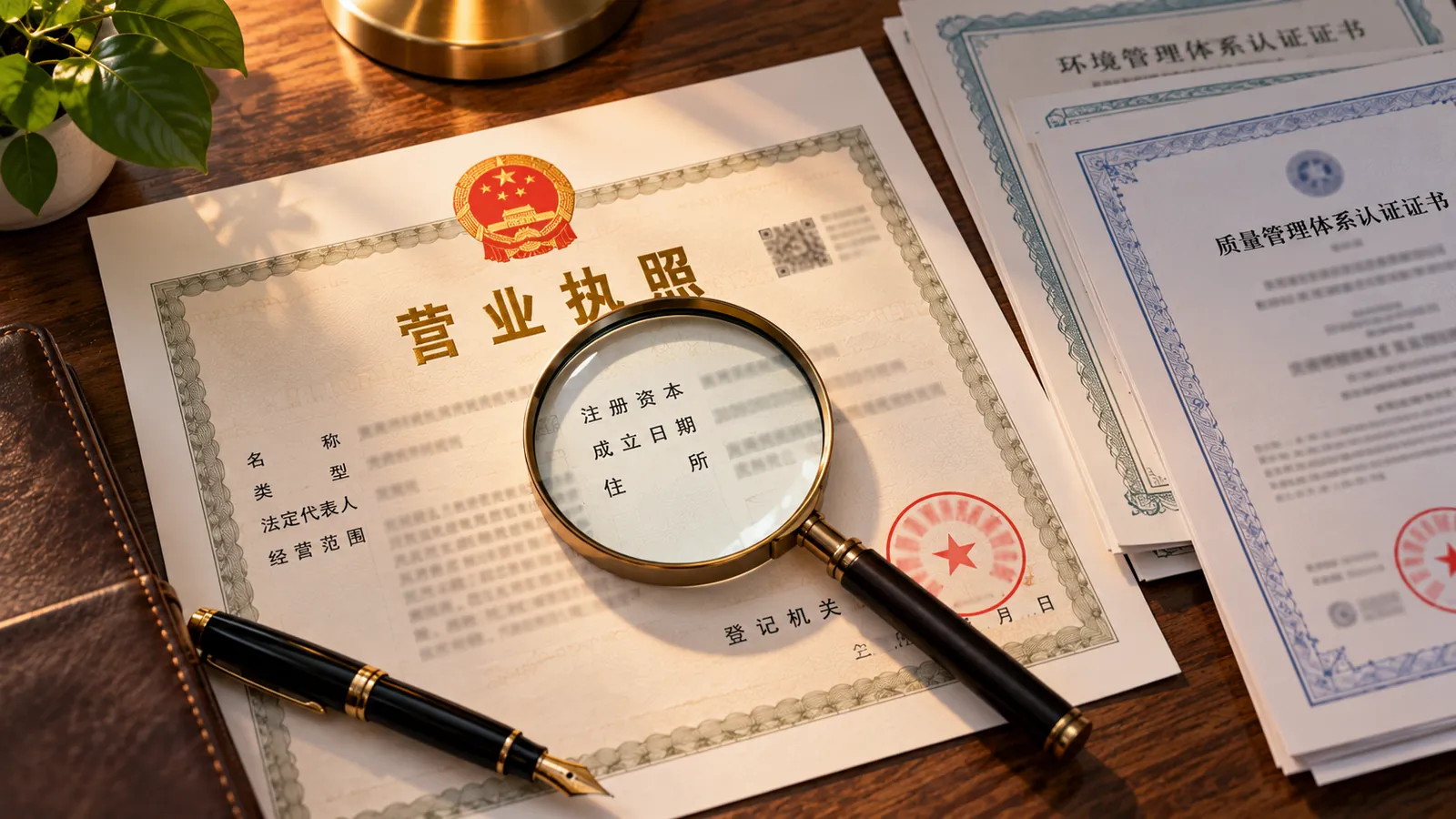
Open the supplier profile and verify: business license, Manufacturer vs Trading Company designation, factory address, certifications (ISO, CE, FDA, UL), capacity and export markets. If the supplier refuses to share a license or factory photos, move on, no legitimate exporter with real production cannot show a business license in thirty seconds.
How to read a Chinese business license
The business license is public data and the fastest fact-check available. The unified social credit code (18 characters) looks up the company in China’s national registry and reveals the registered name, legal representative, registered capital, and business scope. Check three things against it:
- Name match, the license name matches the Alibaba account name (watch for one-letter differences hiding an unrelated shell company).
- Scope includes manufacturing, a scope of “trading” or “wholesale” describes a trading company, whatever the profile claims.
- Address plausibility, a “Shenzhen electronics factory” registered in an office tower in another province is exactly what it looks like.
How to verify certificates
Certificates get the same treatment: request the PDF, note the report number and issuing body, and check the scope. A CE certificate for “LED strip lighting” does not cover your LED desk lamp; an ISO 9001 certificate issued to the trading arm does not certify the factory that will make your goods. Real test reports come from named labs (SGS, T?V, Intertek, BV) with numbers you can verify; fake ones arrive as logo-stamped photos. For regulated categories, children’s products, food contact, batteries, certificate verification is not a nice-to-have; customs and marketplace compliance both run on it.
Step 3: Evaluate communication with an RFQ test
Message 5?8 suppliers with the same RFQ. Shortlist on: reply within 24 hours, itemized quote (EXW / FOB / DDP), MOQ and lead time, video tour willingness. Drop anyone pushing off-platform payment.
A strong RFQ states quantity, target spec, target price if you have one, packaging requirements, and destination market, and it treats every supplier identically so answers are comparable. The replies sort themselves quickly into three tiers: suppliers who answer with a structured quotation, suppliers who answer with a price and nothing else, and suppliers who answer with questions, the third group is often the most serious, because they are already engineering the product in their head.
The itemized quote matters more than the number. A supplier who can quote EXW (ex-works), FOB (freight on board), and DDP (delivered duty paid) separately understands export practice; a single mysterious number usually means a trading company reselling, or padding that will reappear in freight. Also send one slightly awkward technical question, how quickly and how honestly someone says “let me check with the engineer” tells you how they will handle the hundred small questions of a real production run.
Step 4: Always order samples
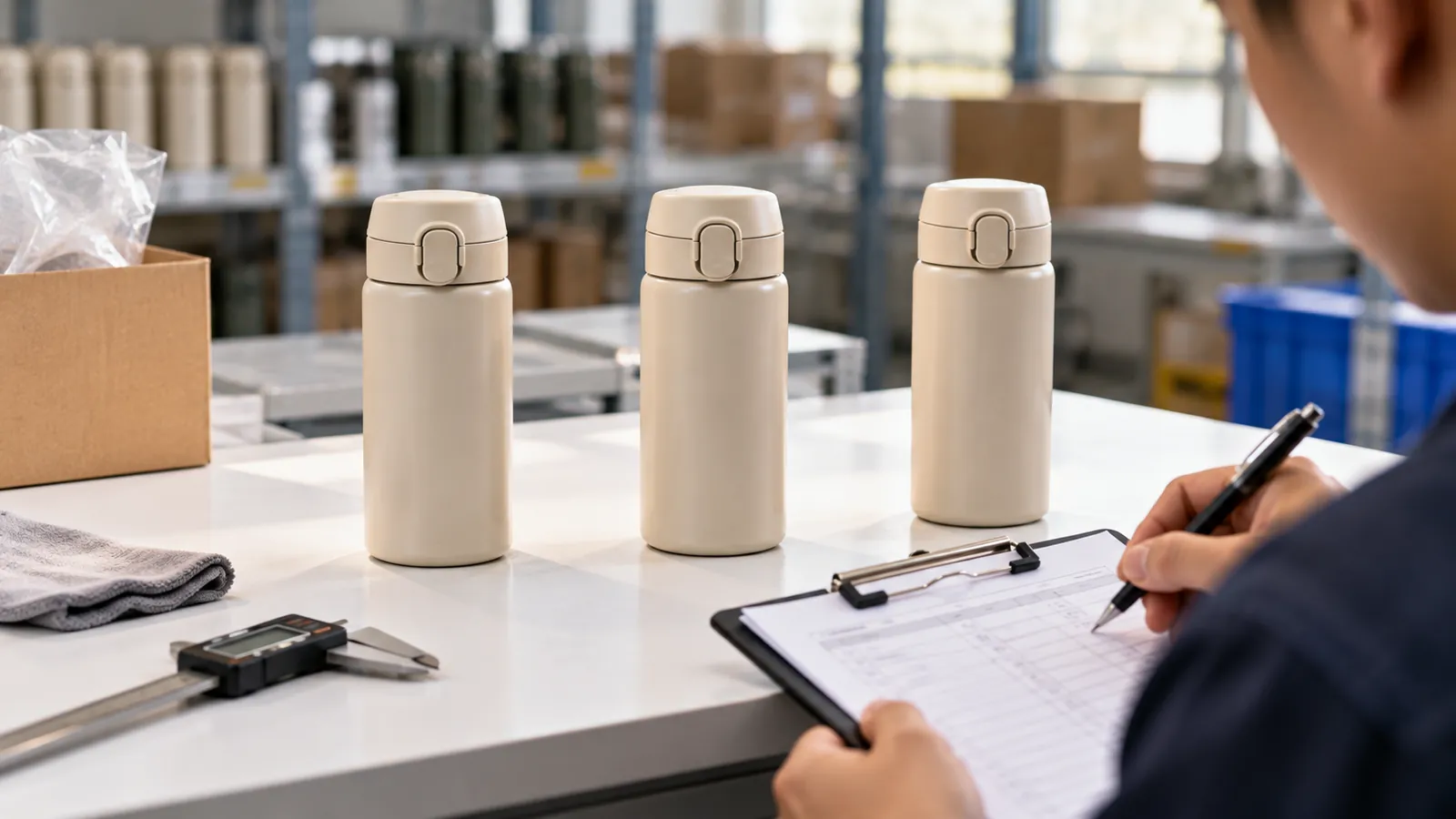
Order from 2?3 finalists. Compare material, packaging, and function over 7 days. Sample + DHL ($30?$80) is the cheapest insurance in importing.
Test the sample like a customer, not a tourist: use it daily for a week, stress the weak points (hinges, seams, connectors, battery life, print durability), weigh it, measure it against the spec sheet, and photograph it. Then, critically, compare the samples from all finalists side by side. The differences that decide returns rates are rarely visible in product photos: wall thickness, coating quality, spring tension, smell.
Understand what a sample proves and what it does not. A sample is handmade, by the most careful person in the building, from selected materials. Production is machines, shifts, and schedule pressure. The sample proves the factory can hit the spec; nothing except inspection proves the production run did. That is why every professional buying flow ends with AQL-based pre-shipment inspection, not with the sample.
Step 5: Verify the factory is real
Before serious money moves, get proof beyond the listing. Two levels:
- Live video tour, ask them to walk from the entrance to the specific production line, unprompted, showing machines running and workers present. Rehearsed tours loop the same corridor; ask them to open a random door or show the warehouse ceiling.
- On-site factory audit, an inspector spends a day at the facility checking licenses, machines, capacity against your order size, QC stations, and working conditions, and returns a photo-documented report. For first orders above a few thousand dollars, this is the difference between verifying and hoping. Our factory audit guide explains what a proper report contains.
The audit also answers the question profiles answer dishonestly: real capacity. “We can produce 100,000 units monthly” means nothing; an auditor counting machines and cycle times, against your quantity and deadline, produces a number you can actually plan around.
Step 6: Pay with Trade Assurance only
Keep specs in Alibaba chat, sign the Trade Assurance contract, pay 30% + 70% before shipment after inspection. Never wire to a personal account.
The 30/70 split is the market standard for a reason: the deposit funds materials, and the balance is leverage for quality. Paying 100% upfront removes every incentive the factory had to fix problems quickly. Inspection gates the balance payment, the sequence is produce, inspect, pass, then pay the balance, then ship. Reversing that sequence is how buyers pay for goods they never see again.
And keep every specification, materials, dimensions, colors, Pantone codes, packaging, tolerances, logos, inside the Trade Assurance contract or a signed attachment to it. A spec that lives in a WeChat thread does not exist when a dispute starts. If it is not in the contract, it is not in the arbitration.
How do you negotiate without poisoning the relationship?
Chinese factory negotiation runs on face and volume. Two things move prices sustainably: order size and predictability. “We are testing two products this quarter; the winner reorders monthly at larger volume” is a real negotiation position. “Give me your best price” repeated five times is not, it reads as a buyer with no plan, and the response is either silence or a price with quality quietly removed. Counter-offers that keep a margin for the factory get better goods; squeezing to the last cent gets you the batch they needed to move anyway.
What are the 7 red flags to avoid?
- Price 30?50% below market, the discount is being taken out of the product.
- No factory address or video.
- Refuses samples.
- Pushes payment outside Alibaba, removing your only recourse.
- New store with zero transactions.
- Certifications with no PDFs or verifiable report numbers.
- Vague replies but promises everything, “no problem” for every question is a problem.
Any one of these is a reason to slow down. Two together are a reason to walk away, no matter how good the price. There is always another supplier; there is not always another deposit.
When to use a sourcing agent instead
Use Alibaba directly for standard, stock products where the filters and Trade Assurance carry most of the risk. Bring in an agent when the purchase is $5k+ or custom, when production needs audits and QC on the ground, when you want 1688-level pricing (see our 1688 vs Alibaba comparison), or when you would rather one accountable party handle sourcing, inspection, consolidation, and shipping.
An agent on the ground verifies in person what a profile claims from 8,000 km away. Yinhan Sourcing is Shenzhen-based, with 150+ factories audited on-site, 3,000+ vetted suppliers in our network, and 3,600+ inspections completed. The economics of the fee are in our guide to sourcing commissions.
What to put in your RFQ
The RFQ is your filter, suppliers reveal themselves in how they respond to it. A strong one fits in a screen and answers their questions in advance: product name and reference photos or links; target quantity per order and expected reorder frequency; required spec points (material, dimensions, weight, colors, packaging); destination market (so certification requirements surface early); target price if you have one, stating it filters out suppliers who cannot reach it and anchors the negotiation; and the terms you expect quotes in (EXW / FOB / DDP). Send it identically to every supplier on your filtered list, and score the replies on the same grid: speed, completeness, itemization, and whether they asked intelligent questions back. The grid, not gut feel, is what you compare a week later.
New to the whole process? Start with the complete guide to importing from China, which maps every stage this guide touches, with costs and timelines.
FAQ
Is Alibaba safe in 2026?
Yes with Verified + Trade Assurance suppliers. No if you chase the cheapest listing. The platform’s protection system works; the danger is buyers who route around it or never engage it.
Manufacturer or trading company, which should I choose?
Manufacturer for custom and volume; good traders are fine for mixed small lots. The problem is not trading companies, it is trading companies pretending to be factories, which breaks your price benchmarking and your quality accountability.
How many suppliers should I contact?
5?8 with the same RFQ is the sweet spot: enough to benchmark prices and test responsiveness, few enough to actually evaluate the replies. Twenty unanswered RFQs waste a week; three quotes tell you nothing about the market.
What if the sample is perfect but production is bad?
That is the normal failure mode, not a surprise, samples are handmade by the best worker, production is machines and shifts. Pre-shipment inspection on the finished lot is the control that catches it.
Should I pay a supplier’s “verification fee” or “agency fee”?
No. Legitimate suppliers earn from orders. Any fee requested to “verify” you, reserve a price, or unlock a discount is either a scam or a supplier you cannot trust with your deposit.
How long should supplier verification take?
The full routine, filters, license check, RFQ round, samples, factory proof, runs 2?4 weeks. Every week of verification is cheaper than a week of dispute resolution with a supplier on the other side of the world.
Related guides
- 1688 vs Alibaba: which should you buy from?
- Factory audit in China: what it covers
- AQL inspection guide: sampling rules
- China sourcing agent checklist
Written by the Yinhan Sourcing team, sourcing agents on the ground in Shenzhen, verifying suppliers for importers every week.