
Quality Control · 2026 · 11 min read
A factory audit is an on-site inspection of your supplier before you send money, licenses, machines, capacity, quality systems, working conditions, all checked in person by someone who knows what a real factory looks like. It is the cheapest way to discover that a “manufacturer” is a trading company with a rented office, or that a workshop of twelve people cannot possibly ship your 50,000-unit order on time. This guide explains what an audit covers, the four audit types, what happens on audit day, and how to read the report you get back.
- Any first order above roughly $5,000, any custom-manufactured product, and any regulated category.
- A live video tour is a useful first filter against obvious fakes, but it cannot verify documents, interview workers away from managers, or measure capacity.
- Third-party certificates can be borrowed, expired, or scoped to a different product line or a different company in the same group.
The logic of auditing is information asymmetry. Everything you know about a supplier before an audit is self-reported: a profile, certificate PDFs, photos that may not be their floor. Your first order usually commits 50?500 times the cost of the audit itself. One day at the facility flips the information balance, you see the machines, the lines, the QC station, and the warehouse with your own inspector’s eyes, and you make the decision on evidence instead of marketing.
Why audit before the first order?
Most sourcing disasters were visible in the factory weeks before they became disasters: the “500-worker plant” with two production lines, the quality certificate borrowed from a sister company, the capacity that exists only in the quotation. An audit catches these while they are still free to fix, before the deposit, before the tooling, before the season is committed to a supplier who cannot deliver it.
Rule of thumb for when to audit: any first order above roughly $5,000, any custom-manufactured product, and any regulated category (children’s products, food contact, electronics). Below that line, a rigorous video tour plus license verification is a reasonable screen; above it, an on-site audit pays for itself many times over.
What are the 4 audit types?
1. Initial / capability audit
The pre-contract check for new suppliers: business license and registered scope verified against originals, ownership structure, real manufacturer vs trading company (do the machines exist, and do they make your product type?), production capacity measured against your order size, and baseline quality controls. This is the audit most buyers need before a first order, and the one that answers the only question that matters pre-deposit: can this factory produce my order, to my spec, on my timeline?
2. System / quality management audit
A deeper grade of how the factory runs: document control, incoming material inspection, in-process QC, calibration records, defect logging, corrective-action handling, and alignment with ISO 9001-style quality management principles. The question it answers is different from capability: not “can they make it once” but “will batch 50 be the same as batch 1”. Relevant when you plan a long-term partnership, a multi-process product, or production you cannot inspect every month.
3. Social compliance audit
Labor conditions, working hours, wages, safety measures, dormitory conditions where applicable, and use of underage or unauthorized labor. This is not only ethics, for brands selling in the EU or US, or to retail chains, supply-chain labor compliance is increasingly a legal requirement (forced-labor legislation, import bans on goods made with coerced labor) and a reputational one. A social audit documents, with records and interviews, how the workforce is actually treated.
4. Environmental audit
Waste handling, emissions, chemical storage, and regulatory compliance, especially relevant for categories with polluting processes: textiles dyeing, electroplating, printing, chemicals. The business risk is concrete: factories running illegal processes get shut down mid-order, and your deposit and delivery date go down with them.
What happens on the audit day?
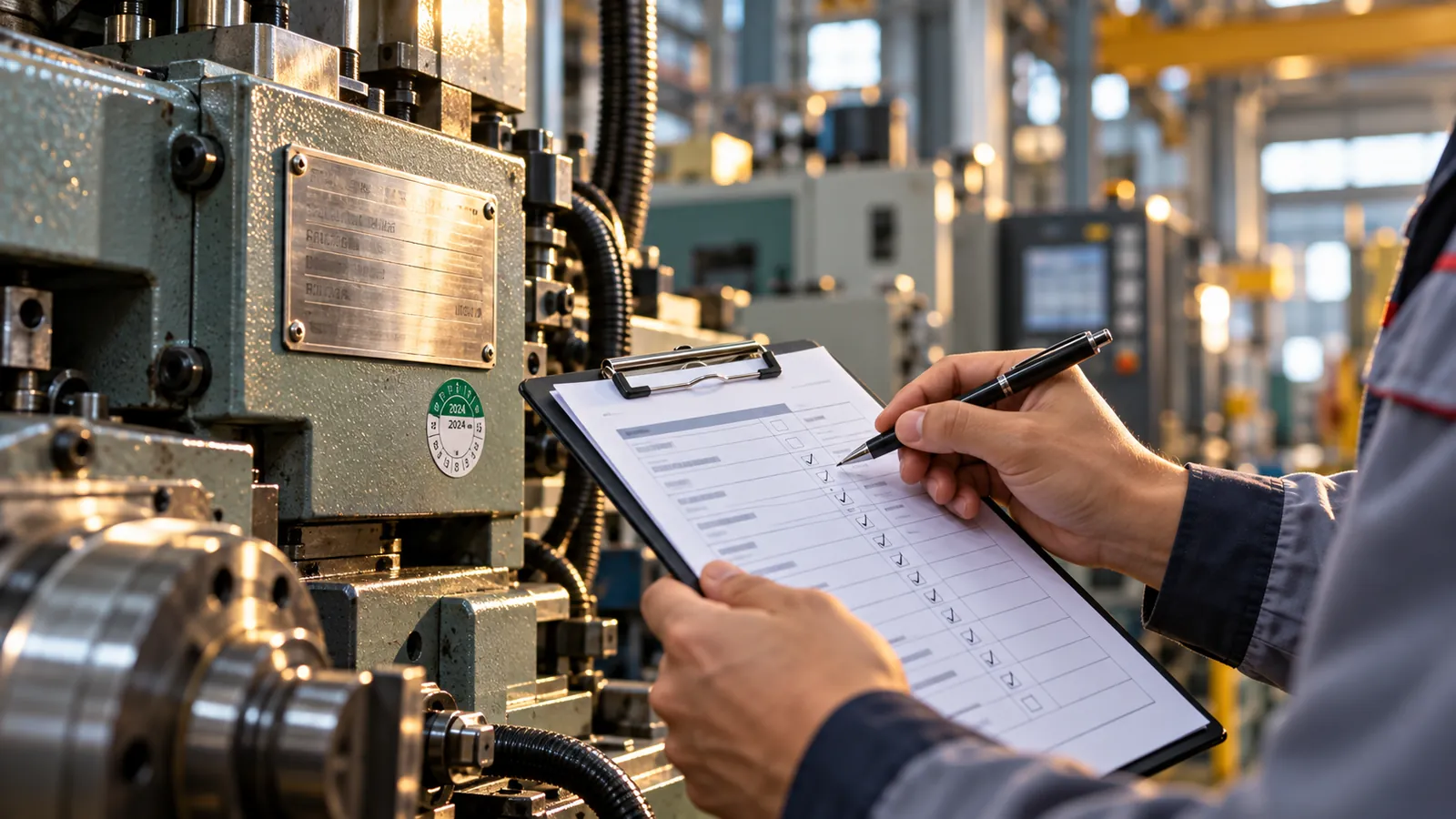
A proper audit runs 4?8 hours on site, structured roughly like this:
- Facility tour, buildings, layout, warehouse, and whether the physical operation matches what was claimed in emails. Auditors notice what buyers cannot from photos: how many lines are actually running, how much inventory is real, whether the “QC lab” has equipment plugged in.
- Line observation, production in progress, machine counts by type, worker headcount by process, cycle times observed rather than stated. This is where capacity gets verified against your order: machines ? cycle time ? shifts, compared with your quantity and deadline.
- QC review, the inspection station, calibrated instruments, how defects are logged, what happens to failed units, and whether incoming materials are checked at all.
- Worker interviews, conducted away from managers, they reveal real working hours, payroll practice, skill levels, and whether the QC team on the org chart exists on the floor.
- Document checks, business license against the registry, export history, certifications verified against issuing bodies, and any test reports the factory claims.
An experienced auditor also reads the things that never make the checklist: housekeeping (chaotic floors predict chaotic quality), how management answers unexpected questions, whether the sample room matches the production floor’s capability, and the mood of the line workers. Audit skill is judgment layered on checklist, which is why it matters who performs it.
How do you read your audit report?
Demand substance over polish. A useful report contains:
- A risk rating, a clear recommendation (pass / pass with conditions / fail), not a vague shrug.
- Capacity numbers that map to your order, machine counts and cycle times, not “we can do 100,000/month”.
- Photo evidence of every specific claim, the QC station, the machines, the warehouse, the certificates on the wall.
- Discrepancies, plainly stated, what the profile claimed vs what the audit found.
- Clear recommendations, proceed, proceed with conditions (e.g., inspection every order), or walk away.
Vague praise, “factory is good, recommend cooperation”, is a wasted audit. A real report lets you make a decision; a brochure helps nobody. Ask to see a sample report before commissioning one (our agent vetting checklist lists this among the ten checks).
What an audit costs, and what it saves
A standard one-day capability audit is from $350 (that is what we charge, see our pricing). Against a first order of thousands, it is the highest-return dollar in importing. The savings it produces are invisible when they work, you never see the factory you didn’t lose your deposit to, which is exactly why buyers who skip audits keep believing skipping is free.
What an audit cannot do
An audit is a snapshot of capability, not a guarantee of this shipment’s quality. A factory that passes an audit can still ship a bad batch, materials get substituted, processes drift, a big order squeezes yours. That is why audits pair with AQL-based product inspections: the audit proves the factory can produce; the inspection proves this batch did. The two together cover the supplier risk; neither alone covers both halves.
One more limit: an audit certifies a point in time. Factories change, management, location, quality culture. Re-audit trigger points: a year of partnership, a change in product type, a drop in quality, or any ownership or address change the factory mentions.
We audit factories on the ground before you commit, see manufacturing & factory management and real outcomes in our case studies.
Which findings do we see most often?
After hundreds of audits across China’s industrial regions, the same handful of findings accounts for most failures, worth knowing because each one teaches what profiles hide:
- Capacity shortfall, the “500-worker plant” with two running lines and a photo studio. Capacity claims collapse the moment someone counts machines and watches cycle times against your deadline.
- Trading company reality, a polished office, no machines, and production “handled by partner factories”. Sometimes acceptable, but it must be priced and understood as brokerage, not manufacturing.
- QC on paper only, an inspection bench with no calibrated instruments plugged in, and a QC team that appears on the org chart but not on the floor at 2 pm on a Tuesday.
- Borrowed credentials, ISO or product certificates issued to a sister company, an expired report, or a scope that never covered your product type.
- Second-factory usage, the audited factory subcontracts your order to a cheaper workshop you have never seen. Contract language should require disclosure of any production location change.
None of these are exotic. They are the normal surface of the market, and they are exactly what an untrained buyer cannot see through a listing, a certificate PDF, or a rehearsed video tour.
How do you keep the picture current after the audit?
A passing audit starts a relationship; it does not freeze it. Factories change management, move buildings, take bigger clients that squeeze your production slot. The maintenance cadence that works: pair the audit with inspections on every lot (the inspection data is a rolling audit of output quality), re-audit annually for key suppliers, and re-audit immediately on any trigger, a quality drop, an address or bank-account change, a new product type, or ownership changes the factory mentions. Buyers who audit once and inspect never are protected against the supplier they chose, not against the supplier twelve months later.
Can I join another buyer’s audit to share costs?
Shared audits of the same factory happen, but they dilute exactly what you are paying for: the audit is supposed to test your product’s fit, the lines, materials, and processes your order will use. A shared audit answers generic questions; a targeted one answers yours. For the price difference, go targeted.
What should I send the auditor beforehand?
Your product spec, target quantity and deadline, any certificates the supplier claims, and the questions you actually worry about. An audit scoped around your real risks returns a decision-ready report; an unscoped one returns a generic form.
Does a failed audit end the relationship?
Not necessarily, it ends this order with this factory at this time. Some findings are fixable and re-auditable; others (fake certificates, refusal of access, undisclosed subcontracting) are character findings, not capability findings, and those are permanent. The report’s recommendations section exists precisely to tell you which kind you are looking at.
What does an auditor need from me on the day?
Access and honesty about your priorities. The factory is informed you are coming; the auditor walks with your spec and your questions. The only thing you should NOT arrange is a choreographed visit, an audit where the factory scripts the route is theater, not verification, and experienced auditors will tell you when that is happening.
Audit, then what, how long until production can start?
With a passing report in hand, the usual sequence runs fast: contract and spec signed, deposit paid against the audit-verified account, sample confirmed, production scheduled. Buyers who audit first typically start production within one to two weeks of the report, and, more importantly, start it once. The time an audit takes is recovered immediately in the rework, disputes, and re-orders it prevents; nobody budgets for those until they arrive.
The supplier says audits insult them, now what?
Professional factories receive auditors routinely and treat them as part of qualifying a serious buyer, many will ask for your credentials in return, which is fair. Resistance framed as offense is usually one of three things: a trading company that cannot survive an audit, a workshop that would fail one, or a negotiation tactic to skip verification. All three are answers. A supplier with nothing to hide books the audit.
New to the whole process? Start with the complete guide to importing from China, which maps every stage this guide touches, with costs and timelines.
FAQ
When do I need a factory audit?
Any first order above roughly $5,000, any custom-manufactured product, and any regulated category. Below that, video verification plus license checks are a reasonable screen, but the audit is the standard once real money moves.
Can I audit remotely by video?
A live video tour is a useful first filter against obvious fakes, but it cannot verify documents, interview workers away from managers, or measure capacity. Use video to screen; use a physical audit before money moves.
The supplier passed an “SGS audit”, do I still need my own?
Third-party certificates can be borrowed, expired, or scoped to a different product line or a different company in the same group. Verify the certificate’s issuing body and scope, and for your specific product and order, a targeted audit answers questions a generic certificate never will.
Audit or inspection, which comes first?
Audit first, before the deposit; inspection later, on the finished goods. They answer different questions, capability vs this-batch quality, and professional buyers run both at their respective moments.
How long does an audit take to arrange?
Typically 3?7 working days from commissioning to report in reachable industrial regions, including scheduling with the factory, the on-site day, and report writing. Rush arrangements exist; scheduled ones produce better reports.
Related guides
- AQL inspection guide: sampling rules
- How to find reliable suppliers on Alibaba (2026)
- China sourcing agent checklist
- Private label sourcing from China: starter guide
- Full-service China sourcing
Written by the Yinhan Sourcing team, our auditors walk factory floors across China’s industrial regions every week.