
- What does AQL actually mean?
- What are the three defect classes?
- How AQL sampling works
- How do you choose AQL levels for your product?
- Where does each check happen in the inspection timeline?
- When AQL is not enough: 1-by-1 inspection
- What happens when a lot fails
- What an inspection report contains
- Why does AQL belong in the contract, not just the booking?
- FAQ
- Related guides
Quality Control · 2026 · 10 min read
AQL, Acceptable Quality Limit, is the statistical standard behind almost every professional product inspection in China. It answers the two questions every importer faces on a finished order: how many units do I check, and how many defects are too many? This guide explains the defect classes, how the sampling tables work, which AQL levels fit which products, when AQL is enough, and when you should pay for 1-by-1 inspection instead.
- It is the worst long-run average quality, defects per hundred units, acceptable for the major-defect class.
- Roughly 200 units at General Level II, not 500.
- The lot is documented with photos and held; the factory reworks or re-sorts; a re-inspection runs on the corrected stock, typically at the factory's cost.
The core idea before any tables: AQL is a business agreement about risk, expressed in statistics. You and the factory agree, in writing, what quality level the shipment must meet; the sampling plan converts that agreement into a concrete, checkable procedure, this many units, this many allowed defects, pass or fail. Without it, “good quality” means whatever the person at the factory feels like that morning.
What does AQL actually mean?
AQL stands for Acceptable Quality Limit, the worst average quality, in defects per hundred units, that is still acceptable for a defect class across ongoing production. The standard behind it is ISO 2859-1 (the international version of the US ANSI/ASQ Z1.4). Two clarifications that prevent most misunderstandings:
First, AQL is not “2.5% of this shipment may be broken”. It is a long-run average target for that defect class. The accept/reject numbers for any single lot come from the sampling tables and are typically tighter than the AQL number itself. Second, AQL describes the procedure’s guarantees, not a promise about the goods: it defines when a lot statistically deserves rejection, not how many defects arrived. The point of the machinery is that both parties accept the same math before inspection day, so the result is not an argument.
What are the three defect classes?
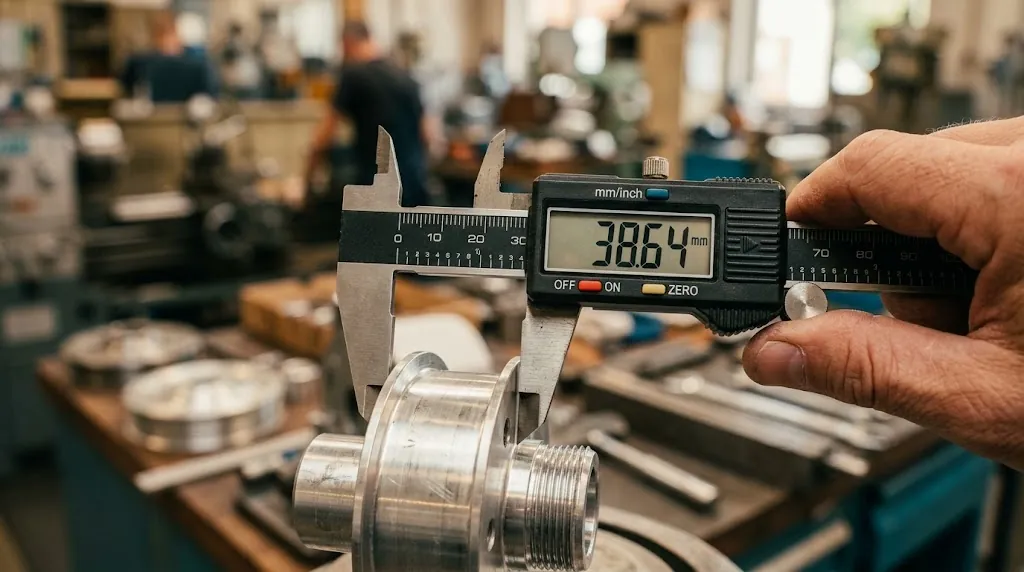
Every defect found during inspection is sorted into one of three classes, each with its own tolerance and its own accept/reject decision:
| Class | Meaning | Standard limit |
|---|---|---|
| Critical | Safety risk, regulatory breach, dangerous fault | AQL 0, zero tolerance, one fails the lot |
| Major | Functional failure, product unusable or not sellable as new | AQL 2.5 |
| Minor | Cosmetic issues a customer would likely tolerate | AQL 4.0 |
Examples make the classes concrete. A loose needle in a garment is critical, it is a safety hazard and a recall in waiting. A zipper that jams on the third pull is major, the customer returns it. A slightly crooked stitch on an inside seam is minor, most customers never notice. A scratch on the display of a premium electronics product might be minor on a budget item and major on a flagship, which is exactly why the classification is product-specific and decided by the buyer, not the inspector, before inspection day.
The discipline that makes AQL work is the defect list: a written catalog for your product, each defect type, its class, photos of acceptable vs unacceptable, and boundary samples if needed. Without one, inspection day becomes a debate; with one, it becomes measurement. A good inspection agency will help you build it; a great one asks for it before you think of it.
How AQL sampling works
AQL does not inspect everything, it inspects a statistically valid sample. The mechanics, in order:
- Lot size, the quantity of finished, packed goods in the shipment batch.
- Inspection level, General Level II is the default for most orders; reduced and tightened levels exist for track-record adjustments.
- Sample size, your lot size maps through the ISO 2859-1 table to a code letter and a concrete sample quantity.
- Accept/reject numbers, the master table converts your AQL level and sample size into two numbers: pass below this many defects, fail at it.
A worked shape: a 500-piece order at General Level II pulls a sample of roughly 50 units, drawn at random across the finished, packed goods, from multiple cartons, not the top layer the factory helpfully prepared. The inspector checks those 50 against the defect list, sorts every finding into critical/major/minor, and compares the counts against the accept/reject numbers for your AQL levels. Exceed the major limit, even by one unit, and the lot fails; the exact counts come from the table for that sample size, which the inspector should read out before starting so nobody debates arithmetic afterward.
Note how the curve flattens: a 10,000-unit order samples around 200 units, not 1,000. Statistical confidence grows with lot size, so the proportional sample shrinks. This is also why AQL is cheap relative to its value, the same few hundred dollars covers a pallet or a container.
How do you choose AQL levels for your product?
- 2.5 / 4.0 (major / minor), the standard for most consumer goods, and where virtually every first order starts.
- 1.0 / 2.5, premium-priced products, cosmetics visible on arrival, brands with strict return policies or low defect tolerance in reviews.
- 4.0 / 6.5, low-value industrial or construction goods where minor flaws genuinely do not affect use.
- Critical stays at 0 in essentially every category. Safety tolerance is not a negotiation.
Tightening AQL costs money twice, inspection is the same, but factory rework and rejected lots increase. The correct response to a quality gap is usually a better factory or a better defect list, not an impossibly strict AQL that turns every lot into a dispute.
Where does each check happen in the inspection timeline?
AQL defines how to sample; the import calendar defines when. Four standard checkpoints:
- First article inspection, the first production units off the line, checked against spec before the run proceeds. Catches spec misreads at the cheapest possible moment.
- During production (DUPRO), a mid-run check when some percentage is complete. Catches systematic errors while there is still time to correct the rest of the run.
- Pre-shipment inspection (PSI), the gate: run when 80?100% of the order is finished and packed, so the sample represents the shipment you are about to pay for. Most quality disasters that reach customers were catchable here.
- Container loading check, verifies the right goods, quantities, and carton condition go into the container, and documents the load. Guards against the factory shipping rejected stock or substituting goods at the dock.
For most orders, PSI is the non-negotiable one and the others are risk-based additions. Never schedule PSI after your balance payment, the sequence that protects you is produce ? inspect ? pass ? pay balance ? ship, and any factory that insists on reversing it is telling you something.
When AQL is not enough: 1-by-1 inspection
Sampling is a probability tool: it can miss defects hiding in the uninspected units. When the stakes justify certainty, inspect every unit, 100% sorting. The cases where we recommend it:
- High-value products where one failure costs a return, a review, or an account.
- Safety-critical goods, children’s products, anything with a battery, food-contact items.
- First production runs of a new product or a new factory, where process capability is unknown.
- Amazon launches, where early defects convert directly into listing-killing reviews.
1-by-1 typically runs $0.10?$0.50 per unit depending on complexity, expensive per piece, cheap per disaster, and routinely worth it exactly once per product lifecycle to establish what the factory’s real defect rate is. After a clean sorted batch, buyers often drop back to AQL sampling with data behind the decision.
What happens when a lot fails
A failed inspection is a documented event, not a catastrophe: photo evidence of every defect class, counts against the accept/reject numbers, and the lot held. The factory then reworks, re-sorts, or replaces, and a re-inspection runs on the corrected goods, usually at the factory’s cost under the contract terms your agent negotiated. This is where payment structure does the real work: with the balance unpaid until PSI passes, the factory’s incentive to fix fast is built into the money flow. A buyer who already paid 100% is negotiating rework from the weakest possible position.
Our inspections run on AQL sampling with a photo-documented report per lot, see manufacturing & factory management for how it fits the production cycle, and case studies for what caught defects looks like in practice.
What an inspection report contains
A professional inspection report is evidence, not an opinion. It contains: the sample drawn (how many units, from which cartons, selected at random), the defect catalog results, every finding photographed, classified critical/major/minor, with units-per-hundred counts against your AQL levels, the accept/reject calculation shown against the sampling table, carton and packaging condition, label and barcode verification (a scan test for FBA goods), and measurements against your spec sheet. It closes with a plain verdict: pass, fail, or hold, with recommendations.
The photo discipline is what makes reports usable across a language gap: a defect you can see needs no translation, and a factory’s rework team can act on the image the same afternoon. Reports that summarize (“quality is acceptable”) without evidence are not reports, they are reassurance. You are paying for the former.
Why does AQL belong in the contract, not just the booking?
An inspection only has teeth if the paperwork anticipates it. Three clauses do the work: the spec annex, your defect list and AQL levels attached to the purchase contract, so “failed inspection” has a written definition; the payment linkage, balance payment due after inspection passes, making the factory’s incentive structural; and the rework cost assignment, re-inspection after a failed lot is at the factory’s expense, which is what makes rework fast instead of slow. Your agent negotiates these as standard; buyers who order direct almost never do, and that omission is the difference between an inspection that protects you and an inspection that merely observes.
Who decides how defects are classified, me or the inspector?
You do, in the defect list, before inspection day. The inspector applies your catalog and flags boundary cases with photos; they should not be inventing standards on the factory floor. This is why building the defect list at sampling stage is worth the hour it takes.
Does inspection delay my shipment?
A PSI adds one to two days: scheduling, the on-site day, and the report. Booked alongside production rather than after it, the inspection overlaps with final packing and costs no schedule time at all. The delays that hurt shipments come from skipping inspection, reworking a failed batch at destination takes weeks.
Can I combine AQL sampling with 100% checking?
Yes, and it is a sensible sequence for a new product: 1-by-1 on the first batch to establish the factory’s real defect rate, then AQL sampling on later lots once the data shows the process is stable. Evidence-based trust beats permanent paranoia and permanent blindness equally.
New to the whole process? Start with the complete guide to importing from China, which maps every stage this guide touches, with costs and timelines.
FAQ
What does AQL 2.5 actually mean?
It is the worst long-run average quality, defects per hundred units, acceptable for the major-defect class. The accept/reject numbers for a single shipment come from the ISO 2859-1 sampling table and are typically tighter than 2.5%.
How many units get inspected on a 5,000-piece order?
Roughly 200 units at General Level II, not 500. The sample curve flattens as lots grow, which is why AQL pricing stays flat from pallet to container.
What happens if an inspection fails?
The lot is documented with photos and held; the factory reworks or re-sorts; a re-inspection runs on the corrected stock, typically at the factory’s cost. Payment held until PSI passes is what makes that cycle fast.
Can I set my own defect list?
You should. The inspector applies your standard, product-specific defects, boundary samples, photos of acceptable vs unacceptable, not a generic one. Build it at sampling stage, before production starts.
How much does an AQL inspection cost?
Typically a flat few hundred dollars per man-day regardless of lot size, the sample stays statistically sized while your order scales. Against a container’s value, it is the cheapest insurance in the chain.
Do I need inspection if my supplier has good reviews?
Yes. Reviews describe past shipments; inspection describes this one. The factories with the best reputations pass inspections easily, which is exactly why they welcome them.
Related guides
- Factory audit in China: what it covers
- Amazon FBA shipping from China
- How to find reliable suppliers on Alibaba (2026)
- Private label sourcing from China: starter guide
- Full-service China sourcing
Written by the Yinhan Sourcing team, our inspectors run AQL and 1-by-1 inspections on factory floors in China every day.