- What is 1688.com?
- What is Alibaba.com?
- How do 1688 and Alibaba compare side by side?
- Why is 1688 cheaper than Alibaba?
- How do MOQ differences change the math?
- What buyer protection exists on each platform?
- Which payment methods does each platform support?
- What are the quality and IP risks on 1688?
- When to use each platform
- How to buy from 1688 safely: the agent process
- What is the hybrid strategy experienced importers run?
- FAQ
- Related guides
Sourcing Guides · 2026 · 12 min read
1688 prices run 30?50% lower than Alibaba for the same goods, and that gap is the single biggest lever an importer has on landed cost. The trade-off: 1688 has no buyer protection, no English interface, and no export infrastructure, while Alibaba.com wraps the same factories in Trade Assurance, English support, and international shipping at a markup. This guide compares both platforms attribute by attribute, price, MOQ, payment, protection, risk, and shows the exact process for getting 1688 pricing with buyer-level safety.
- 1688.com is part of Alibaba Group and serves the domestic Chinese wholesale market.
- Safe enough that it is the industry standard for professional importers.
- On simple, high-volume stock items, yes, that is the normal range we see across home goods, kitchen products, and textiles.
The fastest way to understand the difference: Alibaba.com is built for overseas buyers, 1688.com is built for Chinese buyers. Often the same factory sells on both. One phone case we routinely use as an example quotes $0.80 on Alibaba and $0.40 on 1688, identical product, identical production line. The gap comes from the sales channel, not the product.
What is 1688.com?
1688.com is Alibaba Group’s domestic Chinese wholesale platform. It is where Chinese retailers, e-commerce stores, Taobao sellers, and small brands buy their stock. Every design decision follows from that audience:
- Chinese interface, RMB pricing. No translation layer, no currency conversion, sellers list at the price a Chinese business pays.
- Factory and wholesaler prices. You buy at the same tier as a Chinese shop owner, which is the tier below export pricing.
- Very low MOQs. Chinese resellers test one or two pieces before reordering, so many stock listings sell in single-piece quantities.
- No export infrastructure. Sellers ship inside China only. There is no English dispute process, no international payment rail, and no customs paperwork.
Because 1688 serves the domestic market, it also carries far more listings than Alibaba, including workshops too small to export, regional specialists, and product variants that never make it onto export listings. For product research, 1688 is the deeper catalog; for a first transaction from overseas, it is the riskier one.
What is Alibaba.com?
Alibaba.com is the export version of the same group’s marketplace, the interface, payment system, and supplier structure are all built for cross-border trade. Its defining features:
- Trade Assurance. Alibaba holds your payment while your order is in progress and refunds you if the goods do not match the signed contract or ship late. This is the platform’s core product, and the reason its prices are higher.
- Export-ready suppliers. Sellers are used to foreign buyers: English communication, export documents, FOB or DDP quotes, and photos of previous export orders.
- International logistics. Sellers can quote delivered prices and arrange freight to your door or to an Amazon fulfillment center.
- Verification layers. Verified Supplier status, years-on-platform, response-rate metrics, and transaction history give you a screening framework (our 2026 supplier verification guide covers the full routine).
None of that is free. Export suppliers price in English-speaking sales staff, compliance documentation, international payment fees, and the operational risk of serving buyers they will never meet in person. You receive a service; you pay for it in the unit price.
How do 1688 and Alibaba compare side by side?
| Attribute | 1688 | Alibaba |
|---|---|---|
| Language / currency | Chinese, RMB | English (multi-language), USD |
| Buyer protection | None for foreign buyers | Trade Assurance escrow |
| Typical MOQ | 1?10 pcs for stock items | 100?1,000+ pcs |
| Price level | Domestic factory price | +30?50% export markup |
| Payment | Alipay, Chinese bank transfer | Card, T/T, PayPal, Trade Assurance pay-later |
| Shipping | Domestic China only | International, FOB / DDP quotes |
| Disputes | In Chinese, locally | In English, via Alibaba |
| Catalog depth | Deepest, incl. small workshops | Export-oriented subset |
| Best for | Repeat orders, low MOQs, margin | First orders, custom manufacturing, protection |
Why is 1688 cheaper than Alibaba?
Three costs sit inside an Alibaba price that a 1688 price does not carry. First, export overhead: English-speaking sales teams, export licenses, compliance paperwork, and international certifications cost real money every month, and that cost lands in the unit price of every order. Second, payment and counterparty risk: cross-border payments, currency conversion, and the possibility of foreign disputes get priced in as a margin cushion. Third, channel competition: Alibaba listings compete against thousands of identical export offers from other suppliers, so margins are padded before discounting starts.
On 1688, the seller prices for a Chinese reseller who pays by Alipay today, receives tomorrow, and reorders next week if the goods sell. There is no export service to fund and no translation layer to maintain. The product off the same production line is identical, the channel is what changed. This is why the gap survives negotiation: you cannot negotiate away a platform’s cost structure.
As a rule of thumb across the categories we source most, home goods, kitchen products, textiles, small electronics, the export-to-domestic gap clusters between 30% and 50%. Simple, high-volume items sit at the top of the range; complex items with certification requirements sit at the bottom, because compliance cost follows the product to any channel.
How do MOQ differences change the math?
Minimum order quantities behave differently on the two platforms, and the effect compounds with price. Alibaba export suppliers quote MOQs of 100?1,000+ pieces because export handling, documentation, and freight consolidation only pay off at volume. On 1688, stock items routinely sell in 1?10 piece quantities, because the domestic resale model lives on fast, small, frequent replenishment.
For you as a buyer, this means 1688 is not only cheaper per unit, it is often the only way to buy a product at all without commissioning production. Testing five stock-keeping variants at 10 pieces each is a normal 1688 transaction; on Alibaba the same research program would require five MOQ commitments of 500+ units. The exception: custom-manufactured products (your own mold, your own spec) have production MOQs on any platform, because the factory is funding tooling that only you will use.
What buyer protection exists on each platform?
Trade Assurance is the honest reason Alibaba costs more. The mechanics: you sign an order contract on-platform, your payment is held by Alibaba rather than released to the supplier, and the contract specifies what ships by when. If the goods arrive off-spec or late, the platform arbitrates in English and can refund you. It is not perfect, disputes take weeks and quality judgment calls go both ways, but it changes the power balance between a first-time buyer and an unknown factory.
On 1688 there is no equivalent for foreign buyers. Once your payment clears, through Alipay or a Chinese bank transfer, your recourse is arguing with the seller in Chinese, under local dispute norms, with no platform arbitration layer. Chinese domestic buyers do have consumer and commercial protections that function reasonably well; a foreigner without a Chinese entity, language, or local presence effectively does not. This is the single largest risk on 1688, and it is a risk about recourse, not about fraud, most 1688 sellers are legitimate businesses who ship what they listed. The problem appears on the minority of orders where something goes wrong.
Which payment methods does each platform support?
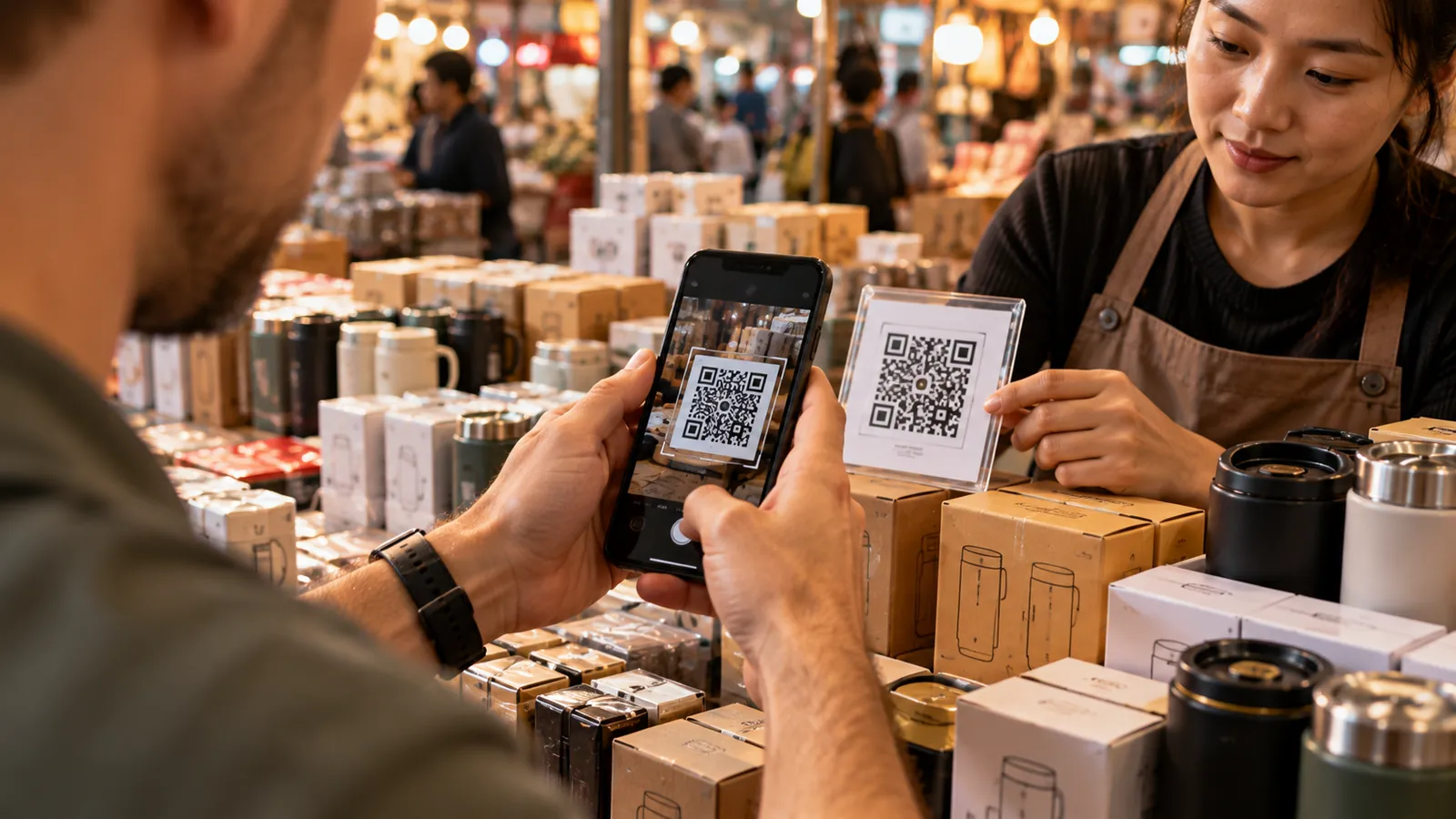
On Alibaba you pay like an international buyer: credit card, bank telegraphic transfer (T/T), PayPal on some orders, Trade Assurance pay-later options, and platform-managed escrow. On 1688 the rails are domestic: Alipay with Chinese identity verification, or a Chinese corporate bank account. Foreign cards do not work. In practice, this means a foreign buyer transacts on 1688 only through one of three routes: a Chinese entity of their own, a local partner, or a sourcing agent who buys as the local buyer of record. The third route is what the rest of this guide covers.
What are the quality and IP risks on 1688?
The price gap tempts buyers into assuming the product risk is the same. It is not, two differences matter. First, vetting depth: export suppliers have already been filtered by their willingness to serve foreign buyers, hold certifications, and document their claims. 1688 listings include the same tier of factories plus thousands of workshops with no verification at all, quality tiers that never appear in the description, and stock photos reused across five shops. Second, IP and compliance exposure: 1688 carries branded overruns, uncertified electronics, and copy products that would be a legal problem to import and sell in the US or EU. Buying them is easy; selling them is where the risk lands.
Both risks are manageable, with inspection before shipment and supplier verification before payment. What they are not is manageable alone from overseas. This is the honest summary of the 1688 equation: the platform gives you better prices and a deeper catalog, and takes away every mechanism that protects you. You have to bring your own protection.
When to use each platform
Use 1688 when:
- You have local payment capability, your own, or through an agent.
- You are restocking a product whose spec and quality you already know.
- MOQs on Alibaba exceed your budget or your storage.
- Margin is the whole point of the business model (dropshipping, resale arbitrage).
- You need variants or workshop products that do not exist on export listings.
Use Alibaba when:
- It is your first order with a new supplier.
- You need custom manufacturing with a signed, enforceable spec.
- You want Trade Assurance protection on the payment.
- You need English support, export documents, or delivered pricing.
- The product is regulated and certification traceability matters.
How to buy from 1688 safely: the agent process
The established way to combine 1688 prices with real protection is a China-based sourcing agent who buys as the local buyer of record. The seller never knows a foreigner is involved; disputes, if any, happen in Chinese between two local parties. The process in five steps:
- Step 1, Quote. You send product links from 1688 (or photos and a spec). The agent reads the RMB price, confirms the seller, and quotes you the domestic price plus a transparent service fee, typically a percentage that slides down with order size.
- Step 2, Pay in your currency. You pay the agent in USD/EUR by card or bank transfer, with an invoice in your name. No Chinese payment account needed.
- Step 3, Purchase and receive. The agent buys, and goods arrive at their warehouse, not a mystery address. Multiple suppliers’ goods consolidate into one inventory.
- Step 4, Inspect. This step is where the model earns its fee: goods are checked against your spec, AQL sampling for bulk orders, or 1-by-1 for small/high-value lots, with photo reports before anything ships.
- Step 5, Consolidate and ship. All goods leave as one consignment with export documents and a freight mode chosen for your timeline (air, sea, rail, or express).
The fee economics are straightforward: a service fee in the single digits buys you local payment rails, a warehouse, inspection, and someone who argues in Chinese on your behalf. Against a 30?50% platform price gap, the arithmetic favors the agent route in almost every scenario where the order is more than a few hundred dollars. We run exactly this process daily, see our China sourcing services and supplier and product sourcing, or read how fees work in sourcing commission explained.
What is the hybrid strategy experienced importers run?
In practice, the question is not 1688 or Alibaba, most established importers use both in sequence. The pattern: discover and first-order on Alibaba (Trade Assurance protects the relationship-building phase), audit and sample until the supplier is trusted, then move repeat orders to 1688 through an agent once quality is proven, keeping the export channel as a fallback. Factories accept this happily; many quietly prefer domestic orders because payment is faster.
The reverse pattern also exists: buyers who find a product on Alibaba discover the identical item on 1688 for 40% less, and switch immediately. That works when the goods are simple stock items, and burns people when the “identical” 1688 listing turns out to be a different quality tier. Anything where quality variance exists needs the inspection step, whichever platform the price came from.
FAQ
Is 1688 owned by Alibaba?
Yes. 1688.com is part of Alibaba Group and serves the domestic Chinese wholesale market. Alibaba.com is the group’s international B2B platform. Same corporate family, completely different buyers, prices, and protections.
Can foreigners buy from 1688 directly?
Registration is technically possible, but the practical barriers are decisive: Chinese payment methods, RMB pricing, Chinese-language disputes, domestic-only shipping, and no protection if goods are wrong. This is why nearly every overseas buyer goes through an agent rather than buying direct.
Is buying through 1688 with an agent safe?
Safe enough that it is the industry standard for professional importers. Payment and disputes happen locally through the agent, and goods are inspected before export. The residual risk is the agent you chose, which is a question of fee transparency and QC process, covered in our agent vetting checklist.
Are 1688 prices really 30?50% lower?
On simple, high-volume stock items, yes, that is the normal range we see across home goods, kitchen products, and textiles. Complex or certified products compress the gap because compliance cost follows the product to any channel. Always benchmark the same spec on both platforms before concluding.
Does 1688 sell fake or copy products?
Some listings do, branded overruns and counterfeits exist on the platform. For your own-brand products this matters less; for certified or branded goods it is a legal risk you take into your market. Inspection and documentation checks are not optional in those categories.
Can I use 1688 for dropshipping?
Yes, and it is the standard source for agent-based dropshipping, because the unit cost is factory-level. You still need fulfillment handling in China (pick, pack, QC, dedicated shipping lines), which is what an agent provides. Our dropshipping from China guide covers the full model.
Which platform is better for Amazon FBA sellers?
Alibaba for the first custom order (protection + compliance documentation), 1688 for repeat stock orders once quality is proven, with inspection every time. Our Amazon FBA sourcing page covers the whole chain from sourcing to FBA prep.
New to the whole process? Start with the complete guide to importing from China, which maps every stage this guide touches, with costs and timelines.
Related guides
- How to find reliable suppliers on Alibaba (2026)
- Sourcing agent commissions explained
- Shipping from China compared: air, sea, rail, express
- Dropshipping from China with an agent
- Smart home devices sourcing guide
Written by the Yinhan Sourcing team, sourcing agents on the ground in Shenzhen, buying on both platforms for importers every day.