
- Why not AliExpress?
- What does the margin math look like?
- How does agent fulfillment work?
- How is quality checked before dispatch?
- Why is 5?10 day shipping possible?
- Can you brand products on a dropship budget?
- Which platforms can agent fulfillment cover?
- What is the returns and refunds policy?
- When should you graduate from dropshipping to bulk?
- Which products survive dropshipping?
- How does dropshipping cash flow work?
- What does one order cost end-to-end?
- FAQ
- Related guides
Sourcing Guides · 2026 · 10 min read
Dropshipping from China factory-direct beats AliExpress dropshipping on all three things that decide your margins: product cost, quality control, and delivery speed. With an agent handling fulfillment from Shenzhen, orders ship in 5?10 days with defects pulled out before dispatch, at a unit cost that leaves you actual profit. This guide explains the model, the margin math, the fulfillment chain, and when dropshipping stops being the right structure for your business.
- Yes, but the margin now comes from the supply chain, not the trick.
- No, that is the point of the model.
- 5?10 days on dedicated e-commerce lines, shipping day plus transit.
The one-sentence version of the model: you list products, customers order and pay you, and a China-based agent picks, checks, packs, and ships each order from the factory source, you never hold inventory. Everything else in this guide is about running that sentence well.
Why not AliExpress?
- Retail markup. AliExpress prices are retail. You are buying from a middleman who bought from a factory, or from another dropshipper who did. Every layer between you and production is margin you never see.
- No quality control. Every AliExpress order ships blind from a warehouse you have never seen. Nobody checks that the product works, matches the variant ordered, or survives the trip. Your defect rate is discovered through refunds and 1-star reviews.
- Slow, unpredictable shipping. Epacket and standard AliExpress lines routinely run 2?4 weeks, with tracking that goes quiet for days at customs handoffs. Customer complaints, payment disputes, and chargebacks follow slow shipping like shadows.
Factory-direct via an agent wins on all three: you buy at wholesale from the source, goods are inspected before dispatch, and dedicated e-commerce lines deliver in 5?10 days. None of this is exotic, it is the same supply chain established importers use, pointed at single orders instead of containers.
What does the margin math look like?
Take one product example: the same item costs $0.40 through a 1688 factory and $0.80 on AliExpress, and you sell it at $9.99. That $0.40 difference is not a rounding error, after ad costs and payment fees, it is frequently the entire difference between a profitable SKU and one that just covers itself. Multiply across hundreds of daily orders and the sourcing channel is the business model.
| Attribute | AliExpress dropshipping | Agent fulfillment |
|---|---|---|
| Unit cost | $0.80 (retail) | $0.40 (factory) |
| QC before dispatch | None | Check per order or per batch |
| Delivery time | 2?4 weeks typical | 5?10 days |
| Branding | Whatever ships from the marketplace | Neutral or your own inserts |
| Source visibility | Whatever the listing says | Factory quotes you can see |
The last row matters more than beginners expect. With an agent, you see the actual factory quotation for your product, which means you can benchmark it, negotiate it, and find the same product cheaper elsewhere. With AliExpress, the price is whatever the listing says, and the listing was priced to pay everyone in the chain except you.
How does agent fulfillment work?
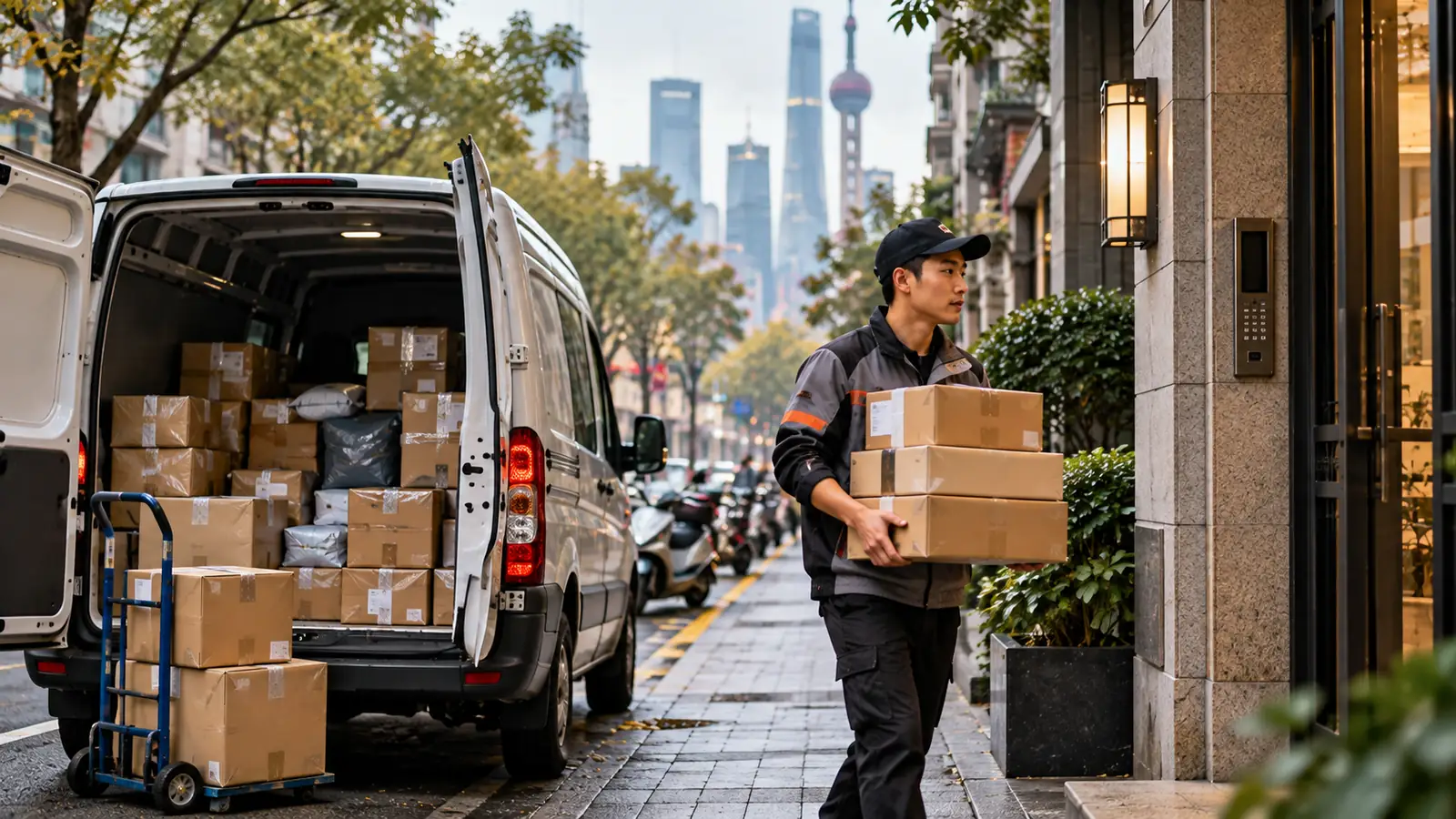
- You list the product on your store at your price, with your product photos.
- Customers order and pay you. Orders flow to the agent via CSV export, spreadsheet, or app integration depending on your platform.
- The agent picks, packs, and ships from Shenzhen, same or next business day on a dedicated e-commerce line, with a tracking number that actually updates.
- Tracking flows to your customer, and you keep the markup.
Behind that flow sits the part that makes it work: the agent holds or sources stock at the factory level, so “in stock” on your store is real. AliExpress dropshipping fails most often not at margins but at availability, the listing said 500 units, the warehouse had 3, and 40 customers bought a product that does not exist. An agent who manages inventory prevents that failure mode at the source.
How is quality checked before dispatch?
With an agent, every order, or a sample of every batch, depending on volume and product value, passes a physical check: correct product, correct variant, working function, clean appearance, correct packaging. Defective units are pulled before they ever meet a customer. Two common configurations:
- 1-by-1 per order, right for higher-value products and early stage, when one bad review costs more than the checking time.
- Batch sampling, right for high-volume, low-value items, using AQL-style sampling on incoming factory batches so the defect rate is measured, not hoped away.
The business translation: QC converts quality from a random variable into a managed number. On AliExpress that step simply does not exist, the defect rate you get is whatever the seller’s warehouse produced that morning.
Why is 5?10 day shipping possible?
Between postal epacket (cheap, slow, unreliable) and express courier (fast, expensive) sits a class of dedicated e-commerce shipping lines: consolidators who move parcels by the ton on fixed routes, clear customs in bulk, and hand off to local postal networks at destination. That is what agents book, 5?10 day delivery at rates that keep low-ticket dropshipping math alive. The line choice matters by destination and product category (batteries, liquids, and branded goods all have restrictions), which is exactly the kind of detail an agent manages and an AliExpress seller cannot.
Can you brand products on a dropship budget?
You do not need custom boxes to look legitimate. The ladder, cheapest first: neutral packaging (no AliExpress flyers, a real risk with marketplace fulfillment, and a fast way to lose a customer), then a thank-you card or branded insert for a few cents per order, then custom mailers or boxes once volume justifies them. Agents can arrange inserts and custom packaging at modest quantities. The principle: unbranded is acceptable, someone else’s branding is not, and light branding beats heavy branding you cannot afford yet.
Which platforms can agent fulfillment cover?
Agent fulfillment is platform-agnostic: Shopify, WooCommerce, TikTok Shop, eBay, Etsy and more, anywhere you can export order data. The workflow is identical; only the order-sync mechanism differs. What changes by platform is the customer expectation: TikTok Shop buyers expect the fastest delivery and punish delays hardest, which makes the shipping-line choice even more important there.
What is the returns and refunds policy?
Set a policy that matches the economics of cross-border parcels. For low-value items, refund without return, the return freight exceeds the product cost, and fighting a $12 refund over a $4 product converts one complaint into an angry review. For higher-value items, returns route back to the agent’s Shenzhen warehouse, where they can be inspected, re-sorted, and restocked, an option AliExpress sellers never have. Decide this before your first order, not during your first dispute.
When should you graduate from dropshipping to bulk?
Dropshipping is a product-testing and cash-flow structure, not a destination. Once a SKU proves stable demand, bulk wins on every axis: factory price drops further with volume, per-unit freight drops with consolidation, delivery to customers happens from local stock in days, and private label becomes affordable. The usual path: prove the product via agent dropshipping, move proven volume into bulk purchasing, brand it when the data says it will last.
New to e-commerce entirely? Start with our guide for first-time importers, and see how we set up Shopify brands with factory-direct fulfillment.
Which products survive dropshipping?
Not every product suits the model. The survivors share traits: light and compact (e-commerce line rates kill heavy, bulky items), non-fragile (a 9,000 km parcel journey is a stress test), unbranded and generic (no counterfeit risk), simple in function (fewer defect modes to police across thousands of orders), and visually demonstrable (short-form video sells them). Avoid battery-heavy and certified categories as a beginner, batteries restrict which shipping lines you can use, and regulated categories import compliance obligations along with the margin.
The testing flow that works: shortlist 5?10 candidates from trend data, order samples of the best 3?5 through your agent ($30?80 with courier), test them for a week like a customer, and list only the ones that survive, then let small paid spend decide the winner before any real ad budget goes in. Samples first is the same discipline bulk importers use; dropshipping’s low stakes make it even cheaper to run.
How does dropshipping cash flow work?
Dropshipping’s hidden advantage is working capital: the customer pays you at checkout, and the agent’s fulfillment cost is billed later, weekly or bi-weekly in arrears. Your inventory is funded by your customers, order by order. The cash cycle is what makes rapid product testing possible: you can list ten products, spend on ads, and learn from real orders without ever owning stock. The discipline it demands is margin bookkeeping, track product cost + fulfillment + shipping + ad cost + payment fee per order from day one, because the model’s margins are thin enough that an unprofitable SKU looks fine for weeks if you only watch revenue. Stores that die of dropshipping usually die of unmeasured shipping and ad costs, not of bad products.
What does one order cost end-to-end?
Here is a realistic low-ticket order worked through, so the model has numbers attached: a product selling at $9.99. Product cost from the factory: $0.40. Pick-pack-QC-domestic handling: roughly $0.60. Dedicated-line shipping to a US customer: roughly $2.50. Payment processing: about $0.35. That leaves about $6.14 before advertising, the number that decides the business. Whether the SKU lives depends entirely on what customer acquisition costs, which is why the factory-direct channel matters: it hands you roughly twice the ad budget per sale that AliExpress sourcing would, on an identical product and identical selling price.
The corollary: agent fulfillment is not a luxury on low-ticket products, it is what keeps them viable. At a $29.99 price point the same arithmetic has more room in it, which is also why mid-ticket products forgive beginner mistakes that low-ticket ones do not.
Who handles customs for dropship parcels?
The dedicated e-commerce lines clear customs in bulk as consolidated shipments, then hand parcels to local postal networks, the buyer is not the importer of record and pays no separate duty on low-value parcels in most corridors. De minimis thresholds and rules vary by country and change with policy, which is one more variable your agent tracks and your competitor on AliExpress cannot.
How many SKUs should I test at once?
Three to five concurrent tests is the practical ceiling for one operator, enough to find signal, few enough to actually read it. Test structure beats test volume: clear kill criteria set before spending (e.g., no profitable order after $150 of ads) prevent the sunk-cost spiral that kills most new stores.
What breaks agent fulfillment most often in practice?
Not shipping and not QC, those are managed processes. What breaks is inventory truth: your store shows a product in stock that the factory has discontinued or redesigned. The fix is structural, not heroic, an agent who monitors factory stock levels and flags discontinuations before they strand your orders. Ask how they handle it before your first listing goes live; the answer separates operators from intermediaries.
New to the whole process? Start with the complete guide to importing from China, which maps every stage this guide touches, with costs and timelines.
FAQ
Is dropshipping from China still profitable in 2026?
Yes, but the margin now comes from the supply chain, not the trick. Reselling AliExpress listings at markup is dead; factory-direct sourcing with QC and 5?10 day delivery is still a genuinely competitive model.
Do I need to buy inventory?
No, that is the point of the model. You pay per shipped order. Once a product proves out, buying bulk stock improves margin and delivery speed, but nothing forces it.
How fast can orders reach US/EU customers?
5?10 days on dedicated e-commerce lines, shipping day plus transit. Express cuts it to 3?5 days at a cost that only fits higher-ticket products.
What about returns and refunds?
Refund-without-return for low-value items; returns to the agent’s Shenzhen warehouse for higher-value ones, where they can be inspected and restocked. Publish the policy on your store before orders start.
Can I dropship branded products from 1688?
Branded goods found on 1688 at suspicious prices are usually counterfeits, selling them imports legal risk into your business. Dropship generic and own-brand products; leave branded goods alone.
How do I test products without wasting money?
Order samples of 2?5 candidate products from your agent first ($30?80 with courier), test them for a week, and only list the ones that survive. It is the same sample-first logic bulk importers use, scaled to a dropshipping budget.
Related guides
- 1688 vs Alibaba: which should you buy from?
- Private label sourcing from China: starter guide
- Shipping from China compared: air, sea, rail, express
- Sourcing agent commissions explained
- Pet products sourcing from China
Written by the Yinhan Sourcing team, our Shenzhen warehouse picks, checks, and ships dropship orders for stores worldwide every day.