
- Why the CNY shutdown is different from any other holiday
- How does the 2027 order timeline work backwards?
- What happens to freight before and after CNY
- Why does quality risk hide in the restart period?
- What should you prepare before the shutdown?
- What actually happens inside a factory during CNY
- What happens to samples around the holiday?
- How do deposits hold production slots before CNY?
- FAQ
- Related guides
Shipping & Logistics · 2026 · 9 min read
Chinese New Year 2027 falls on February 6, and factories across China shut down for two to four weeks around it. Every year the same pattern repeats: buyers who planned around the shutdown ship normally, and buyers who ignored it lose three to six weeks of selling time and pay premium freight to catch up. This guide gives you the 2027 shutdown timeline, the order deadlines behind it, and a working backwards plan for your restocks.
- The holiday falls on February 6, 2027.
- Freight runs, but at reduced schedules and higher rates.
- Place pre-CNY orders by mid-November to early December depending on product lead time, and finish production by early January.
The dates that matter for CNY 2027: most factories stop production between February 1 and February 8, restart slowly between February 15 and February 22, and reach full capacity again around early March. Freight follows the same curve, with capacity tightening from mid-January and normalizing in late February. The weeks before the shutdown are the busiest of the Chinese manufacturing year.
Why the CNY shutdown is different from any other holiday
Chinese New Year is not a long weekend. It is the one event of the year when the entire manufacturing workforce travels home, and a large share of workers do not return to the same factory afterward. Factories keep a skeleton crew for sales and shipping, production lines stop completely, and restart is gradual because new hires need training. This is why the effective disruption runs six weeks even when the official holiday is two.
Three effects hit importers at once: production stops, freight capacity spikes in price as everyone rushes cargo before the holiday, and quality risks rise in the restart period because new workers run the lines. A buyer who understands all three plans differently from one who only knows “factories close”.
How does the 2027 order timeline work backwards?
| Deadline | What must happen |
|---|---|
| Before December 15, 2026 | Place orders that must ship before the shutdown; confirm factory holiday dates in writing |
| Before January 10, 2027 | Final pre-CNY production complete; goods inspected and packed |
| Before January 15, 2027 | Sea freight booked and loaded; last safe sailing for pre-CNY arrival |
| January 16 to February 20 | Risk window: factories closed or at skeleton capacity; avoid new production starts |
| After February 22, 2027 | Production restarts; expect slower first runs and confirm worker return before promising dates |
| Early March 2027 | Full capacity restored; normal lead times apply again |
Convert those rows into a rule of thumb: for goods you want sellable in February, production must finish by early January. For goods you want sellable in March, you are choosing between a pre-CNY shipment (order in November) and a post-CNY rush (accept the restart risk).
What happens to freight before and after CNY
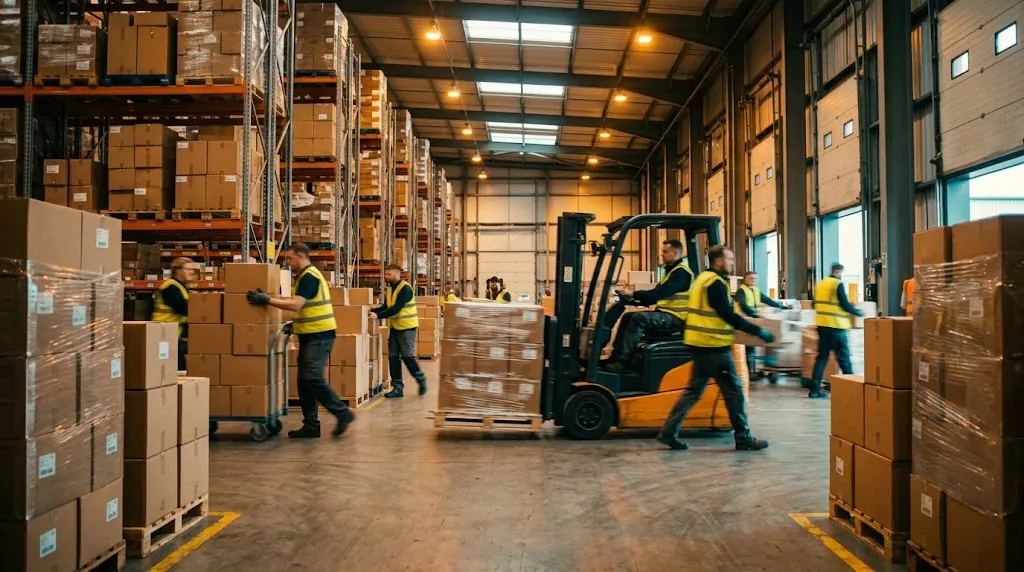
Freight capacity follows the factory calendar. From mid-January, every importer with unfinished orders pushes cargo at once: sea bookings roll, air space sells out, and express surcharges appear. Rates commonly rise 20?50% in the two weeks before the holiday, then stay elevated while the backlog clears after restart.
Two practical responses. First, book freight two to three weeks earlier than you would in a normal season, and confirm the sailing with your forwarder rather than trusting a quoted ETA. Second, decide consciously whether pre-CNY cargo is worth the premium; for some products, shipping after the holiday at normal rates beats panic freight. Our shipping mode comparison covers how each mode behaves under pressure.
Why does quality risk hide in the restart period?
The weeks after restart are when we see the most defects, for a simple reason: lines run with new and returning workers who need time to reach normal speed and accuracy. A first production run in late February carries more variance than the same run in May.
- Confirm with the factory which workers return and when, before accepting a restart production date.
- Tighten your inspection for the first post-CNY batch: consider 1-by-1 checking on the first run instead of sampling.
- Expect slower lead times on reorders placed during the restart weeks, even when the factory says yes.
What should you prepare before the shutdown?
- Get the factory’s exact holiday dates in writing, including restart date and whether they will ship finished goods during the holiday.
- Clear your inspection queue: every lot finished before the holiday should be checked before it, not after restart.
- Settle open payments early; banks and finance staff also take holidays, and a stuck balance payment can hold goods for weeks.
- Confirm your supplier has raw materials for your post-CNY orders reserved, or lead times will stretch on restart.
- Agree what happens to orders that cannot finish: partial shipment before the holiday, or full shipment after.
Our team plans client orders around the CNY window every year, and the difference shows: managed orders ship before the shutdown or immediately after restart, while unmanaged orders drift into the gap.
What actually happens inside a factory during CNY
Picture the typical supplier in the Pearl River Delta: a few hundred workers, most of them migrants from Hunan, Hubei, Jiangxi, or Sichuan, living in dormitories next to the lines they run all year. Chinese New Year is the one holiday that sends almost all of them home, and the journey often takes one to two days each way by train and bus. Production stops. Machines go quiet. The canteen closes. A skeleton crew of security and a manager or two remain, which is why an email sent during the holiday week gets answered, three lines at a time, a day later.
This is also the season when trading companies and agents earn their keep. A factory that will not quote during the holiday still has people who will: agents keep working through CNY because their job is continuity, confirming restart dates, holding sample approvals, and getting you into the production queue for late February. If you buy through a trading company, ask one direct question before the holiday: is the factory producing, or is the trading office answering phones? The difference decides whether your order moves in February or merely gets discussed.
The two weeks before the official holiday have their own character. Production lines sprint to finish and pack everything promised before shutdown, QC gets rushed, and the freight market turns into a bidding war as every importer ships at once. If your goods are in that wave, your pre-shipment inspection is the check that matters, because rushed packing is exactly where labeling and carton mistakes breed.
What happens to samples around the holiday?
New product development effectively pauses for six to eight weeks around CNY, longer than the shutdown itself. The pattern repeats every year: sample requests placed after mid-January wait until factories restart in late February, then join a queue behind the paid production orders that restarted first. Courier services to and from many factories thin out before the holiday and take a week or so after restart to normalize, so even a finished sample can sit in a shipping room.
The fix is calendar discipline. If a new product is targeted for a spring launch, its golden sample needs approval before the holiday, which means the sampling round-trip must start by early December. Payment of the sample fee, address confirmation with the factory, and a clear spec sheet all move earlier than you think they should. Anything that misses the boat waits: expect a new sample made after CNY to arrive for approval in mid-March, pushing production quotes and order placement into late March. Working backward from a sales date, that means the development conversation starts in October. The golden sample process page walks the approval loop that has to finish before anyone signs a mass-production contract.
How do deposits hold production slots before CNY?
Production slots before the holiday are oversold every year. Factories take more orders than their lines can finish by shutdown because some buyers always cancel or delay, and when the calendar tightens, suppliers triage. The deposit is how you keep your place in line: an order with a paid deposit and approved samples is produced before an order that is still negotiating. In practice, a deposit paid by mid-December protects a slot for goods finished before the holiday; by late December you are already negotiating for the January rush; January deposits buy February restart capacity instead.
Two guardrails keep the queue from becoming a trap. First, deposit yes, full prepayment no: the balance stays gated on your inspection and shipping documents no matter how crowded the schedule gets, as covered in the payment terms guide. Second, verify the slot is real. A sourcing agent on the ground can check whether your material has been purchased and your order is actually on the line plan, which is the difference between a promised start date and a real one. When the holiday math gets tight, the honest answer is usually to move production to the restart window with a confirmed slot, rather than pay a rush premium for a February ship date that the factory cannot guarantee. Everything ships again, every year, the calendar just has to be planned backward from it, starting with the full import sequence.
FAQ
When exactly is Chinese New Year 2027?
The holiday falls on February 6, 2027. Production shutdowns typically begin a few days before and extend about two weeks after, with full capacity returning in early March.
Can I still ship goods during CNY?
Freight runs, but at reduced schedules and higher rates. Goods that are finished and inspected before the holiday can ship during it. New production cannot.
How early should I order before Chinese New Year?
Place pre-CNY orders by mid-November to early December depending on product lead time, and finish production by early January. Working backwards from your selling date is the reliable method; our complete importing guide covers the full timeline math.
Do all factories close for the same dates?
No. Dates vary by region and factory, and some run partial lines with volunteers on overtime pay. Never assume; get the dates from your supplier in writing.
Related guides
- How to import from China: the complete 2027 guide
- Shipping from China compared: air, sea, rail, express
- AQL inspection guide: sampling rules
- Why factories delay orders, and how to prevent it
Written by the Yinhan Sourcing team in Shenzhen: we schedule client production around the CNY window every year.