
- Why the Portable Espresso Maker Went Viral
- What You're Actually Buying: Product Anatomy
- What Factories Charge on Alibaba
- Landed Cost: A Worked Example
- How to Vet Espresso Maker Suppliers
- Variants Worth Sourcing
- QC Checklist Before You Ship
- Shipping and Packaging Notes
- Private-Label Angles That Work
- Frequently Asked Questions
- Want Us to Source It for You?
- Related Guides
Sourcing Guides · 2026 · 6 min read
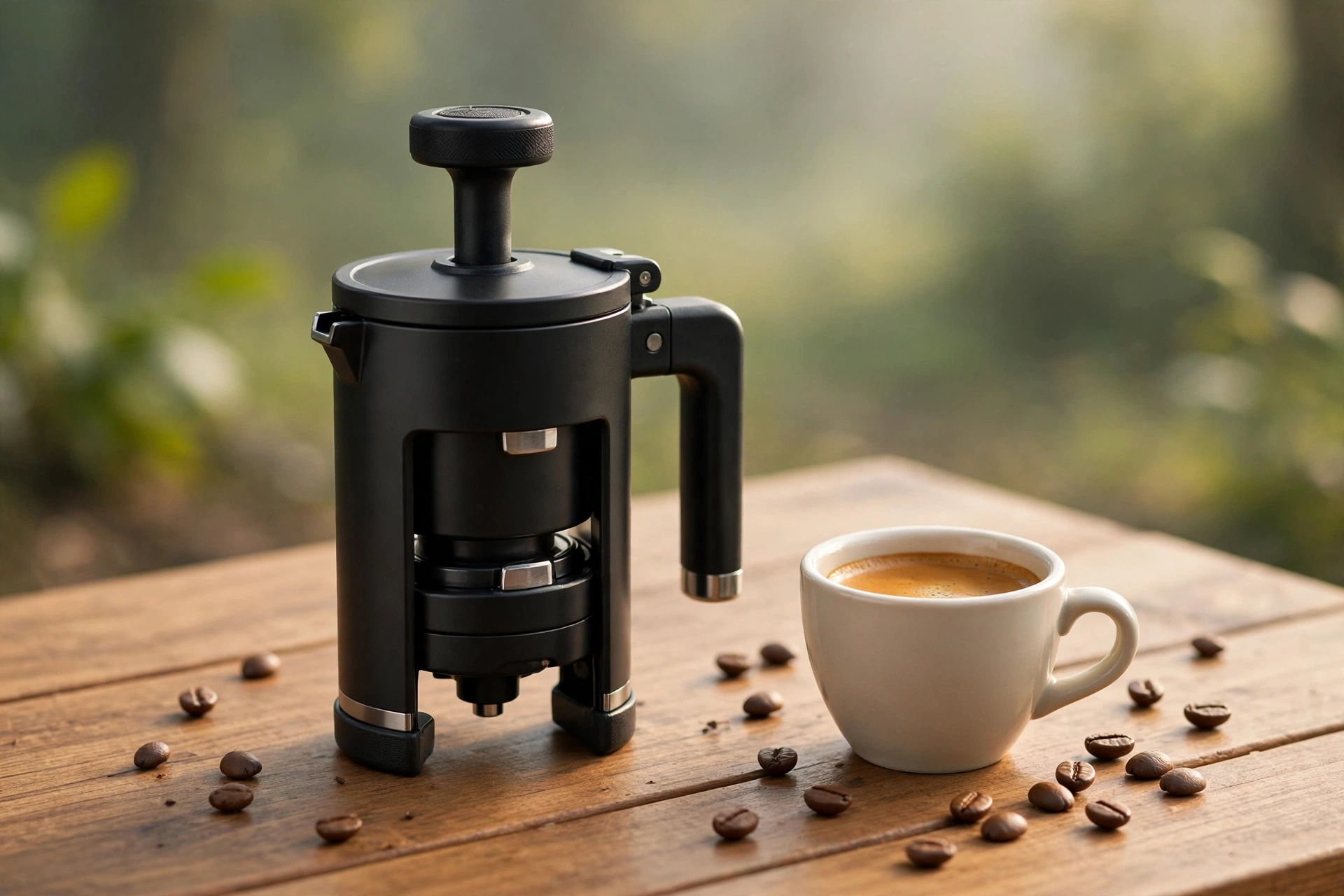
The portable espresso maker turned a niche camping gadget into a mainstream viral product. TikTok travel and office videos showing real espresso made anywhere — no electricity, no café — pushed hand-press machines into the gift and outdoor categories. If you sell coffee gear, travel goods, or men’s gifts, this is a product worth understanding from the supply side.
This guide covers what the product is, what it sells for on Amazon right now, what factories on Alibaba charge, how to vet suppliers, what the landed cost looks like, and what to check before you order.
How this guide was made: prices and MOQs come from live Amazon.com and Alibaba.com listings pulled on 19 October 2026. The QC checklist is the same one our inspectors use on real factory orders.
Why the Portable Espresso Maker Went Viral
Two things drive this product: the work-from-anywhere lifestyle and the gift market. A hand-press espresso maker films well (the extraction shot is inherently satisfying), solves a real problem for travelers and campers, and sits at a price that works for birthdays and holidays.
The category also has a natural upgrade ladder: buyers start with a manual hand-press, then upgrade to electric USB-C models — which means a brand can sell to the same customer twice.
A snapshot of Amazon.com listings on October 19, 2026:
- Fantik Cafein 11, 20-bar USB-C portable espresso maker: $139.99, 4.3 stars, 112 reviews
- Wacaco Minipresso GR (ground coffee) and Nanopresso: among the category’s long-running best sellers
- Wacaco Minipresso NS (capsule version): steady seller in the capsule-compatible niche
The category splits into two tiers: manual hand-press models under $60 and premium electric/USB-C models at $100–$150. The premium tier is newer and less saturated.
What You’re Actually Buying: Product Anatomy
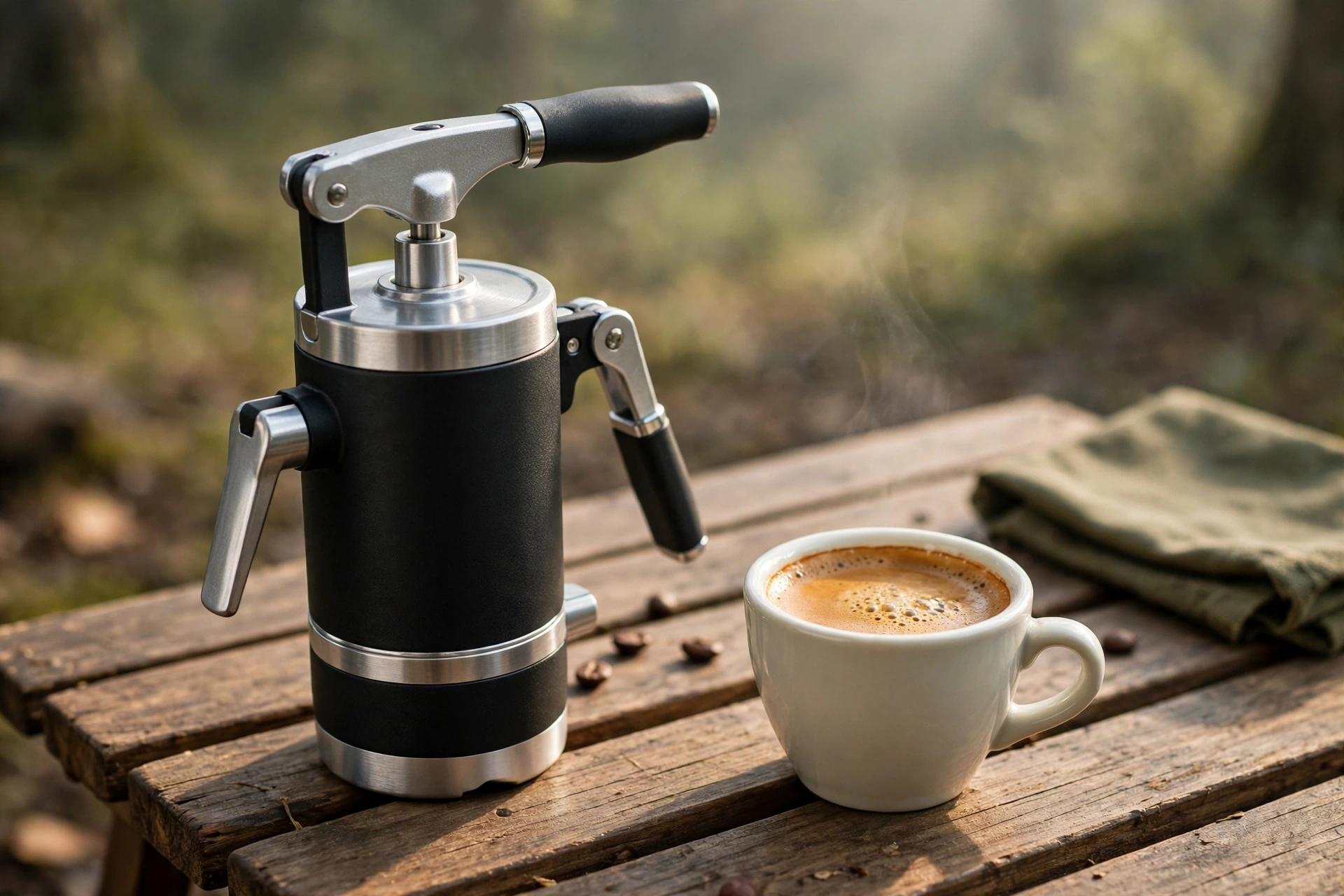
A portable espresso maker is a pressure vessel: a water chamber, a pump or lever mechanism generating 8–20 bars, a portafilter basket, and seals holding it all together. The cost hierarchy follows the pressure system — a true 20-bar electric pump costs multiples of a manual lever, and the seal quality determines whether the unit lasts years or months. In manual models, the basket and tamper design determine extraction quality more than anything else.
When comparing quotes, ask for the rated pressure (not “up to” pressure), the basket material, and the seal material. Silicone seals outlast rubber 3:1 in heat cycling.
What Factories Charge on Alibaba
Portable espresso makers come from Guangzhou-area manufacturers specializing in coffee equipment. Current supplier listings on Alibaba (October 2026) show:
- Manual hand-press models: $39–$52 per unit, MOQ 20 pieces
- Mid-range pump models: $84–$135 per unit, MOQ 10 pieces
- High-end commercial-style portables: $215–$340 per unit, MOQ 5 pieces
Note the low MOQs — 5 to 20 pieces — which is unusual for electronics and makes this category testable with small trial orders.
Landed Cost: A Worked Example
Here’s realistic math for 200 units of a manual hand-press model at $45/unit:
- Product cost: 200 × $45 = $9,000
- Pre-shipment inspection (~$280/day): $280
- Air freight (recommended for a first test order; ~$6–8/kg): ~$900
- Import duty (coffee makers typically 0–5% depending on market): ~$200
- Sourcing commission at 5–8%: $450–$720
Total landed: roughly $10,830–$11,100, or about $54–$56 per unit — against $60–$140 retail depending on tier. The premium electric tier carries the better margin; the manual tier competes on volume.
How to Vet Espresso Maker Suppliers
- Ask for pressure test data. A real manufacturer has extraction test logs. A trader will change the subject.
- Request a brewing video. Not a render — an actual unit pulling a shot. Crema quality is visible.
- Check the seal supplier. The best factories name their seal source; the worst say “food-grade rubber” and move on.
- Capsule models: ask about patents. Capsule-system compatibility is a legal minefield; make sure the supplier has licensing or a clean-room design.
- Battery models: ask for UN38.3 upfront. If the supplier hasn’t heard of it, walk away — your freight forwarder will reject the shipment.
Variants Worth Sourcing
- Manual hand-press (ground coffee) — the classic. Lowest cost, proven demand, no battery certification headaches.
- Capsule-compatible — convenience angle; check patent/licensing exposure on capsule systems.
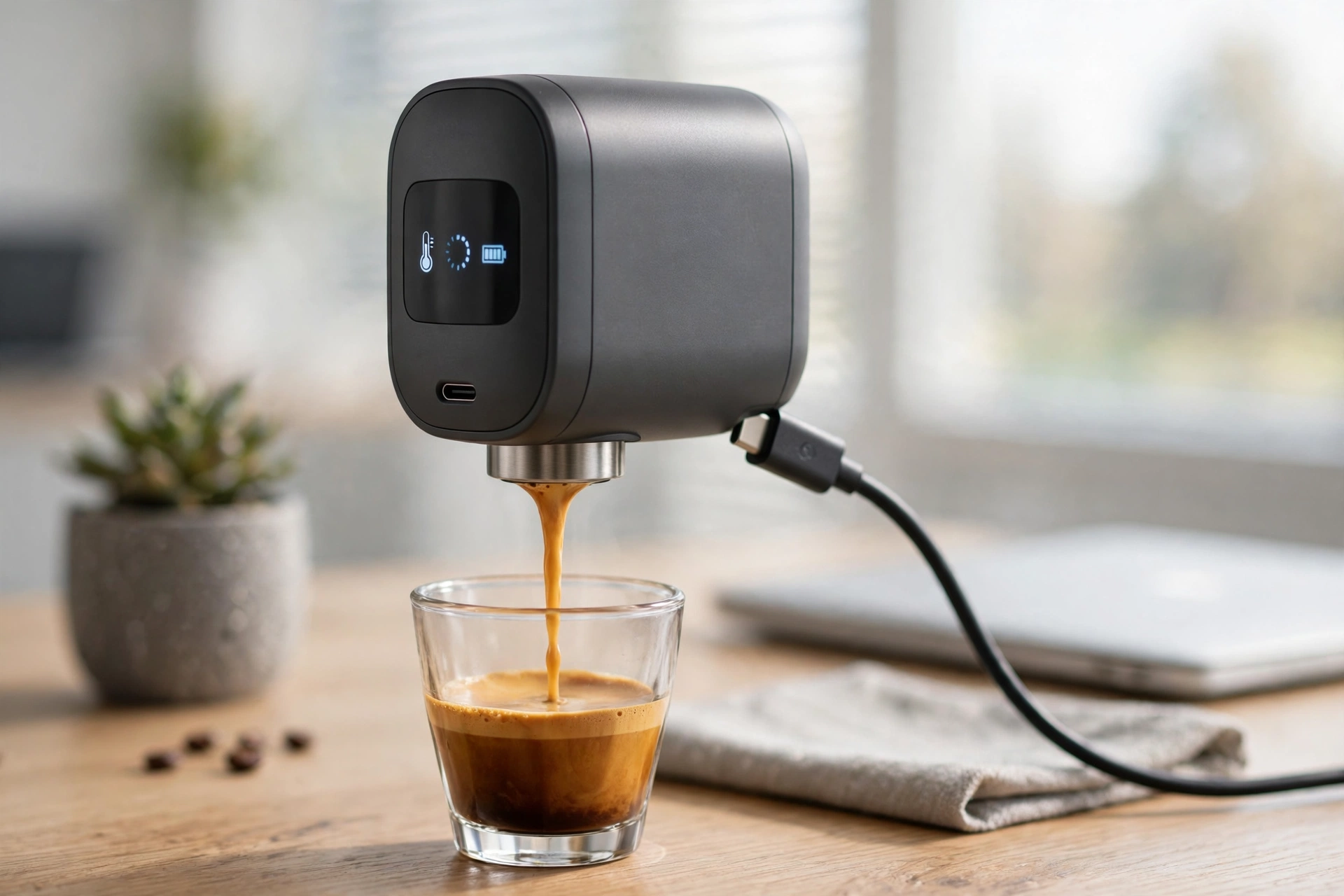
- Electric USB-C with 20-bar pump — the 2025–2026 premium wave; higher margin, needs battery safety certs.
- Car/outdoor bundle — position with a travel case for the gift market.
QC Checklist Before You Ship
- Pressure consistency — test extraction across at least 5 units; weak seals are the top defect.
- Food-grade materials — confirm FDA/LFGB-grade plastics and stainless; request material test reports.
- Battery safety (electric models) — UN38.3 for shipping, plus UL/CE; this is where cheap suppliers cut corners.
- Leak test — pressurize and hold for 60 seconds; gasket failures show up in negative reviews fast.
- Crema quality — brew with the same grind across samples; thin, pale extraction indicates pressure problems.
- Finish and branding — anodized vs painted aluminum; paint chips are a common complaint.
- Certifications — CE, FCC for electric models; food-contact material certs for all.
Shipping and Packaging Notes
Manual models are compact and ship well by air for test orders — 200 units fit in two cartons. Electric models must go through battery-compliant channels; confirm your forwarder handles UN38.3 cargo before you order. Packaging should include a molded insert: the portafilter and tamper rattle loose in generic boxes and arrive scratched. For retail, a magnetic gift box adds ~$1.50 per unit and transforms the unboxing.
Private-Label Angles That Work
The Wacaco-dominated market leaves room at both ends: a budget hand-press undercuts on price, while a premium USB-C model with a travel case owns the gift tier. Custom colorways are the cheapest meaningful tweak — the mechanism is standardized, so differentiation lives in industrial design and packaging. An “espresso + travel kit” bundle (maker, case, ground coffee sampler) lifts average order value without new tooling.
Frequently Asked Questions
What is the MOQ for portable espresso makers on Alibaba?
Surprisingly low: 5–20 pieces for most models, making this one of the easiest categories to test with a trial order.
How much does a portable espresso maker cost from a factory?
Manual hand-press models run $39–$52 per unit. Electric USB-C models cost $84–$135 at MOQ quantities.
Do electric models need special certifications?
Yes — UN38.3 for battery shipping, plus CE/FCC. Manual hand-press models avoid battery regulations entirely, which is one reason they dominate private-label launches.
Is the market too competitive?
The budget tier is crowded, but the premium electric tier ($100–$150 retail) is newer with fewer established brands.
What is the typical landed cost?
For 200 manual units, expect roughly $54–$56 per unit landed including inspection, air freight, duty, and commission.
Manual or electric — which should I launch first?
Manual for your first order: no battery certs, lower MOQ cost exposure, proven demand. Add electric once you have sales data.
Want Us to Source It for You?
We verify the factory, negotiate the price, run pre-shipment inspection against the checklist above, and consolidate your shipment from our Shenzhen warehouse. Get a free quote within 24 hours — tell us the variant and quantity and we’ll handle the rest.