- Why the Sunset Lamp Keeps Going Viral
- What You're Actually Buying: Product Anatomy
- What Factories Charge on Alibaba
- Landed Cost: A Worked Example
- How to Vet Sunset Lamp Suppliers
- Variants Worth Sourcing
- QC Checklist Before You Ship
- Shipping and Packaging Notes
- Private-Label Angles That Work
- Frequently Asked Questions
- Want Us to Source It for You?
- Related Guides
Sourcing Guides · 2026 · 6 min read
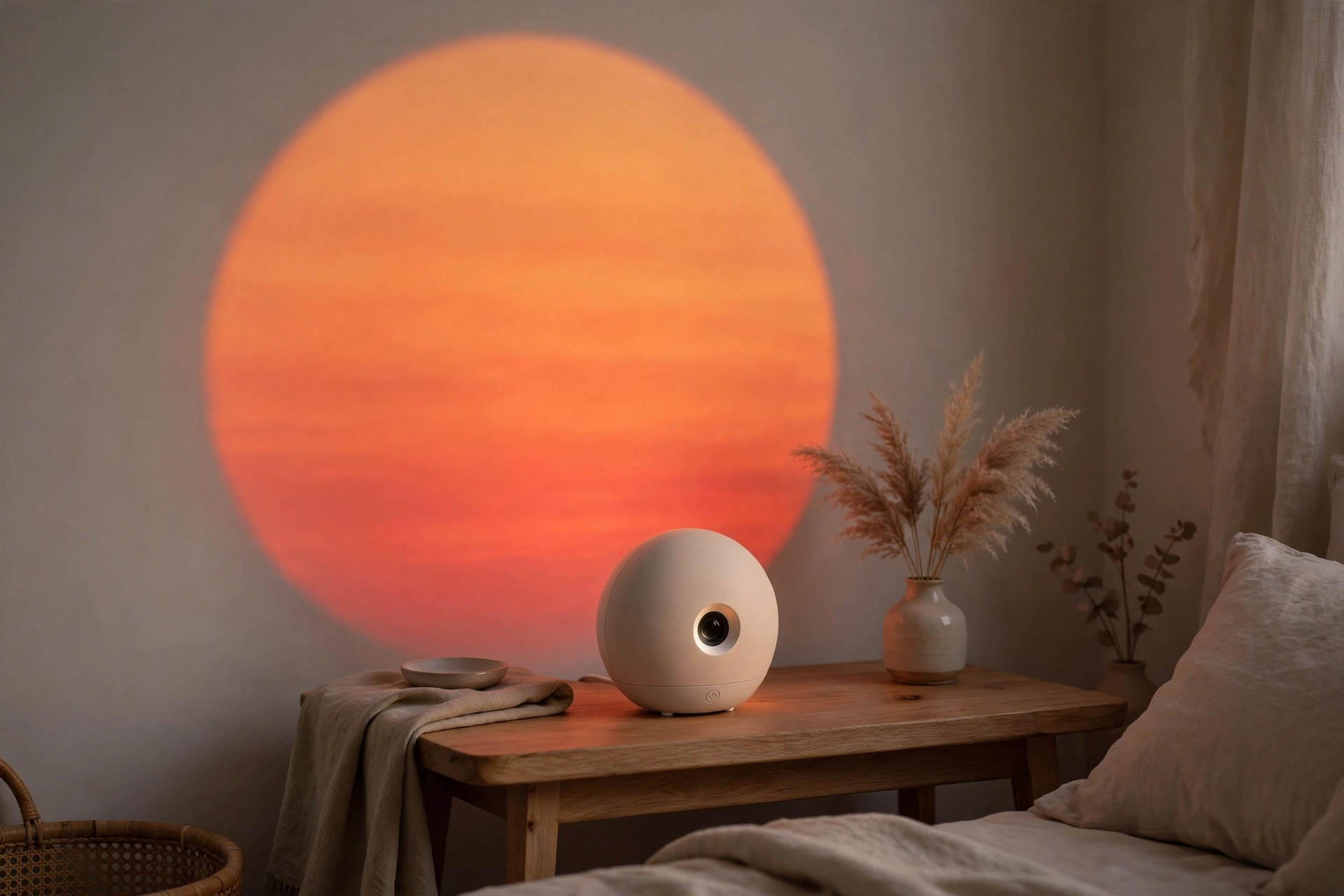
The sunset projection lamp is one of TikTok’s most persistent viral products. It turns any wall into a warm sunset glow, films beautifully in 15-second room-transformation videos, and sells at an impulse-buy price. If you sell home decor, lighting, or TikTok-trending gadgets, this is a product worth understanding from the supply side.
This guide covers what the product is, what it sells for on Amazon right now, what factories on Alibaba charge, how to vet suppliers, what the landed cost looks like, and what to check before you order.
How this guide was made: prices and MOQs come from live Amazon.com and Alibaba.com listings pulled on 18 October 2026. The QC checklist is the same one our inspectors use on real factory orders.
Why the Sunset Lamp Keeps Going Viral
Unlike one-week fads, the sunset lamp has survived multiple TikTok waves since 2021, and a second generation with adjustable color temperature and USB-C charging brought it back in 2026. The formula is simple: dramatic before-and-after visuals, a sub-$15 price, and universal appeal as a gift and room-decor item.
The product also benefits from a replacement cycle most viral gadgets lack: buyers purchase multiples for different rooms, and the gifting use case (housewarmings, dorm rooms, holidays) creates year-round demand spikes rather than a single peak.
A snapshot of Amazon.com listings on October 18, 2026:
- 16-color remote sunset projector: $13.99, 4.1 stars, 1,652 reviews
- Multi-color dimmable sunset lamp with timer: $9.99, 4.3 stars, 781 reviews
- 16-color rainbow projection lamp with remote: $12.99, 4.2 stars, 576 reviews
- Astronaut-style rotating RGB sunset lamp: $6.49, 4.4 stars, 112 reviews
Retail clusters tightly between $6.50 and $14, with the best-reviewed sellers sitting just under $10. Review counts in the hundreds to low thousands signal steady demand rather than a dying trend.
What You’re Actually Buying: Product Anatomy
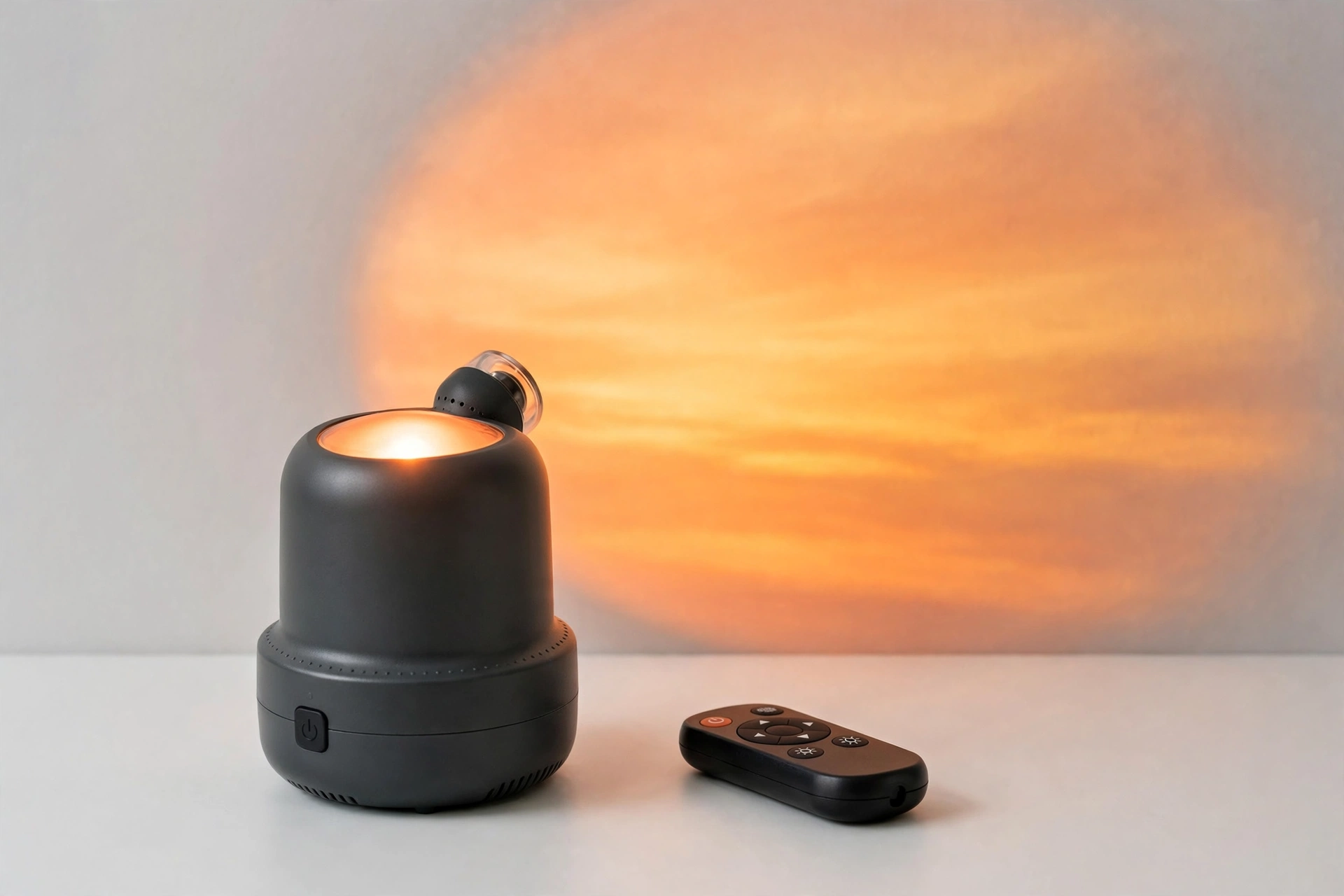
A sunset lamp is deceptively simple: an LED array, a focusing lens, a rotating color wheel or RGB controller, a housing, and a power supply. The cost hierarchy follows the optics — the lens quality determines projection sharpness, which is the visible difference between a $3 unit and a $13 unit. The LED chip determines color accuracy and lifespan. Everything else (housing, remote, packaging) is commodity.
When comparing supplier quotes, ask what LED chip they use and whether the lens is glass or acrylic. Suppliers quoting 30% below market are almost always cutting one of these two components.
What Factories Charge on Alibaba
Sunset lamps come out of the Zhongshan lighting cluster in Guangdong, the same region that produces most of China’s decorative LED lighting. Current supplier listings on Alibaba (October 2026) show:
- Basic 16-color remote models: $1.70–$3.50 per unit, MOQ 50–100 pieces
- Mid-range dimmable models: $5–$8 per unit, MOQ 50 pieces
- Second-generation adjustable color temperature models: $13–$18 per unit, MOQ 50 pieces
At a $2.50 factory cost and a $9.99 Amazon price, the gross margin headroom is roughly 4x before freight, fees, and ads — which is exactly why this product attracts private-label sellers.
Landed Cost: A Worked Example
Factory price is only the start. Here’s realistic math for 500 units of a mid-range model at $3.00/unit:
- Product cost: 500 × $3.00 = $1,500
- Pre-shipment inspection (~$280/day, one day covers this quantity): $280
- Sea freight LCL to US/EU (varies by season; budget $400–$700 for this volume): ~$550
- Import duty (lighting is typically 3–6% depending on market): ~$75
- Sourcing commission at 5–8%: $75–$120
Total landed: roughly $2,480–$2,525, or about $4.96–$5.05 per unit — against a $9.99–$13.99 retail price. The math works, but only if inspection catches the lens and LED defects that define this category’s return rate.
How to Vet Sunset Lamp Suppliers
This category has hundreds of suppliers and wide quality variance. Red flags specific to sunset lamps:
- No lens specification. A supplier who can’t tell you glass vs acrylic, or the lens diameter, is trading — not manufacturing.
- Stock photos only. Ask for a video of the actual unit projecting on a wall. Blurry or dim projections in the supplier’s own video tell you everything.
- Remote included “free.” IR remotes are a top failure point; a supplier bundling them without a pairing test process will ship dead remotes.
- No certification documents. CE/FCC/RoHS test reports should exist before you discuss price, not after you ask twice.
- Zhongshan address, no factory photos. Many listings are trading companies. That’s fine — but their price should reflect it, and they should disclose it.
Variants Worth Sourcing
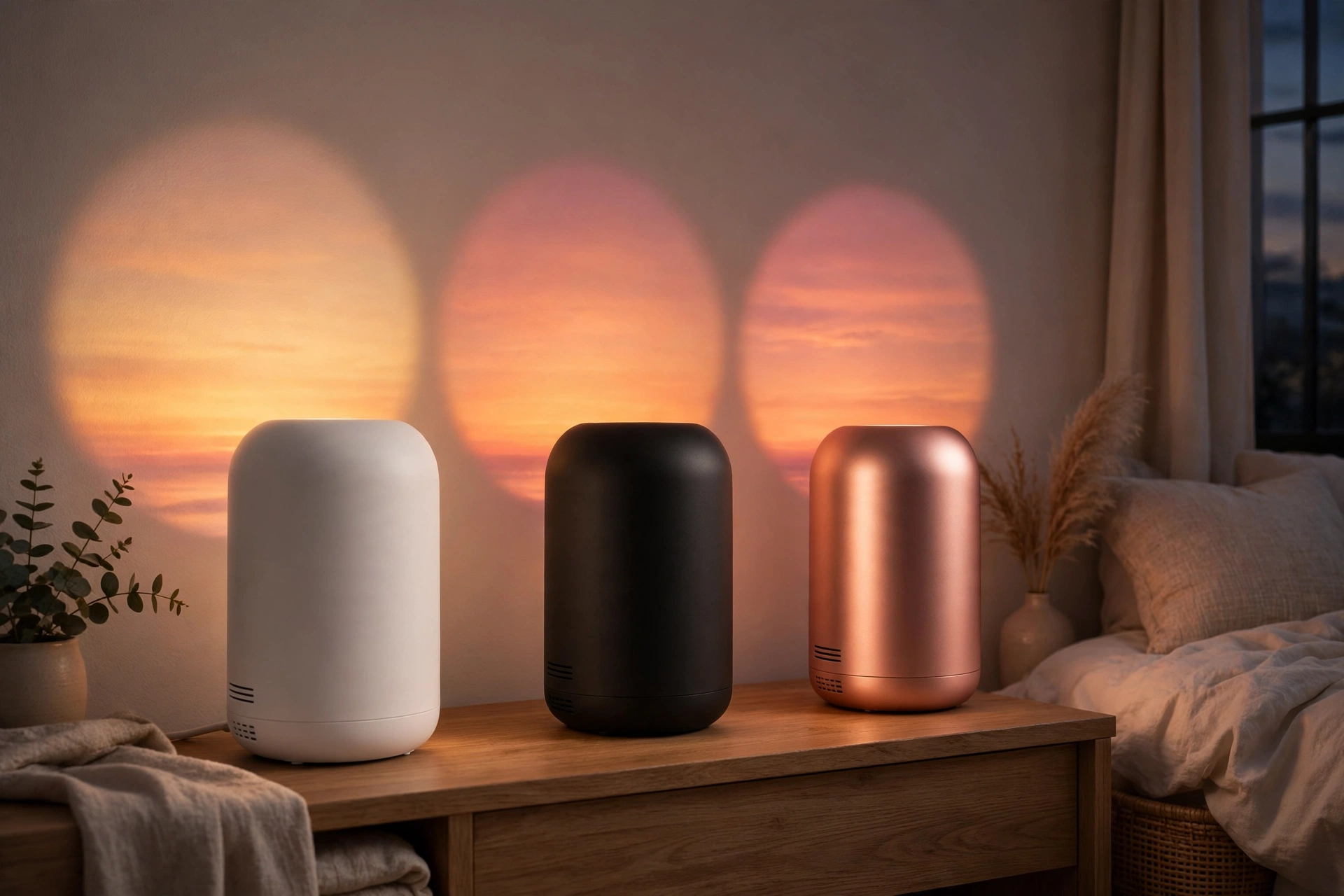
Not all sunset lamps are the same product. The variants with the best sell-through:
- 16-color remote version — the classic. Cheapest to source, proven demand.
- App-controlled version — higher price point, appeals to smart-home buyers.
- Astronaut/rotating projector — novelty angle, strong with gift buyers.
- Second-gen adjustable color temperature — the 2026 refresh; less competition, higher margin.
QC Checklist Before You Ship
Sunset lamps are simple electronics, but the failure modes are consistent. Check these on every batch:
- LED color consistency — sample at least 5 units per batch; cheap LED chips shift color between units.
- Remote pairing — test every remote; weak IR receivers are the top complaint in negative reviews.
- Power input — confirm USB-C on second-gen models; mismatched ports cause returns.
- Projection sharpness — project each sampled unit on a wall at 2 meters; blurry lenses are the second most common complaint.
- Color wheel rotation (where applicable) — check for grinding or stalling; a noisy motor ruins the ambiance use case.
- Packaging drop test — the lens is the fragile point; insist on molded pulp or foam inserts.
- Certifications — CE, FCC, and RoHS for the US/EU; missing certs block Amazon listings.
Shipping and Packaging Notes
Sunset lamps are light and compact — a 500-unit order fits comfortably in LCL. The lens is the only fragility concern, so packaging spec matters more than freight mode. Request double-wall cartons with individual foam inserts; the price difference versus single-wall is cents per unit and prevents the cracked-lens returns that destroy ratings. For Amazon FBA, confirm the packaging survives the ISTA 6-Amazon test profile or expect damage claims.
Private-Label Angles That Work
The product is commoditized, so differentiation comes from packaging and positioning: bundle it as a “sunset + sunrise” sleep kit, target the gift market with premium boxing, or pair it with a smart plug for a “one-tap ambiance” bundle. Custom color-temperature presets are the cheapest meaningful product tweak at the factory level. A “photography edition” with a phone-tripod mount targets the creator niche that made the product viral in the first place.
Frequently Asked Questions
What is the MOQ for sunset lamps on Alibaba?
Most Zhongshan suppliers accept 50–100 pieces for standard models. Custom colors or private-label packaging usually push the MOQ to 500+.
How much does a sunset lamp cost from a factory?
Basic models run $1.70–$3.50 per unit at MOQ quantities. Second-generation models with adjustable color temperature cost $13–$18.
What certifications do sunset lamps need?
CE for Europe, FCC for the US, and RoHS for both. Ask the supplier for test reports before production, not after.
Is the sunset lamp trend over?
No. The second-generation refresh in 2026 restarted the cycle, and steady Amazon review velocity shows ongoing demand rather than a dead fad.
What is the typical landed cost per unit?
For a mid-range model at 500 units, expect roughly $5 per unit landed including inspection, freight, duty, and commission — against $10–$14 retail.
How do I avoid blurry projections?
Specify a glass lens (not acrylic) and require the supplier to send a wall-projection video of the actual production unit before shipment. Blurriness is a lens quality issue, not a settings issue.
Want Us to Source It for You?
We verify the factory, negotiate the price, run pre-shipment inspection against the checklist above, and consolidate your shipment from our Shenzhen warehouse. Get a free quote within 24 hours — tell us the variant and quantity and we’ll handle the rest.