
- What is EXW (Ex Works)?
- What is FOB (Free On Board)?
- What is CIF (Cost, Insurance and Freight)?
- What is DDP (Delivered Duty Paid)?
- How do you compare quotes honestly?
- What are FCA, CFR, and DAP?
- Who books the freight, and why does it change what you pay?
- How do you write Incoterms on quotes and invoices?
- FAQ
- Related guides
Shipping & Logistics · 2026 · 8 min read
Incoterms are the three-letter codes on every quotation that define where the seller’s responsibility ends and yours begins: EXW, FOB, CIF, DDP and their siblings. They decide who pays for transport, insurance, customs and delivery, and who owns the risk while the goods move. Misreading them is the most expensive reading mistake in importing, because a cheap quote with the wrong term is not a discount; it is a bill you have not seen yet. This guide explains the terms that matter for China imports and how to compare quotes honestly.
- EXW has the lowest quoted price and the highest real total, because it leaves the most legs for you to buy.
- The shipper clears customs and pays duties, but the declaration still uses your goods' data.
- DDP to your door or to Amazon, through a freight desk you can hold accountable.
The mental model: each Incoterm is a handover point along the journey from factory to your door. Move the handover point toward yourself and the quoted price drops while your responsibilities grow. Move it toward the seller and the opposite happens. Every quote you receive is an answer to one question: at which point does the seller stop paying?
What is EXW (Ex Works)?
Under EXW, the seller makes goods available at their premises and your responsibility starts there: export clearance, transport to port, freight, insurance, import clearance and delivery are all yours. It is the lowest quoted price and the highest hidden cost, because everything after the factory gate is real money. EXW makes sense when your agent handles everything locally anyway, which is exactly how agents buy on the domestic channel; for a direct buyer without local infrastructure, EXW is a trap dressed as a discount.
What is FOB (Free On Board)?
FOB means the seller delivers the goods onto the vessel at the named Chinese port, covering inland transport and export clearance. From that point, ocean freight, insurance, import clearance, duties and delivery are yours. FOB is the working standard for importers with their own forwarder: it gives you control over freight choice and cost while leaving the local Chinese leg to the party best placed to handle it. When comparing suppliers, FOB prices are the cleanest basis, because every supplier quotes the same handover point.
What is CIF (Cost, Insurance and Freight)?
CIF adds ocean freight and minimum insurance to the seller’s side, with delivery still to your destination port rather than your door. It looks simpler, but read the fine print: CIF insurance is the minimum statutory cover, the seller’s choice of forwarder sets your destination costs, and you still handle import clearance and duties. CIF works when you have no forwarder preference; otherwise FOB plus your own freight usually wins.
What is DDP (Delivered Duty Paid)?
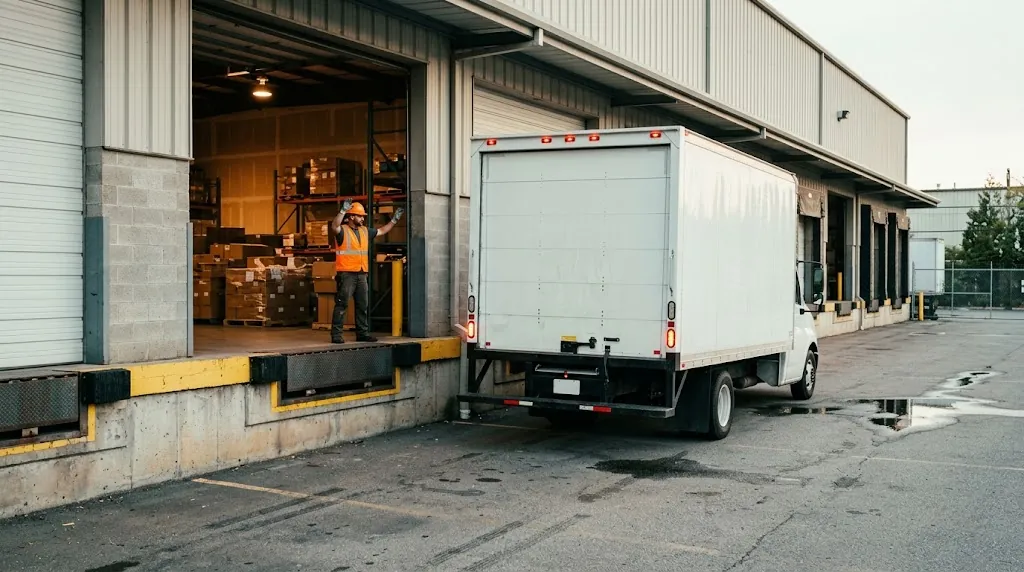
DDP puts export clearance, freight, import clearance, duties, taxes and final delivery all on the shipper. You receive one invoice and a delivery. It is the standard for Amazon FBA shipments, where a delivered-to-dock price keeps your unit economics clean, and it is the friendliest term for first-time importers. The discipline it requires: confirm in writing that the DDP quote genuinely includes duties and destination charges, because “DDP” printed on a quote that excludes them is just a wrong quote.
How do you compare quotes honestly?
| Term | Seller covers | You cover | Best for |
|---|---|---|---|
| EXW | Production at factory gate | Everything after the gate | Buyers with local infrastructure |
| FOB | Inland + export clearance + loading | Ocean freight, import, duties, delivery | Importers with their own forwarder |
| CIF | FOB + freight + minimum insurance | Import clearance, duties, delivery | Simple flows without forwarder preference |
| DDP | Everything to your door, duties included | Nothing beyond the invoice | FBA shipments and first orders |
Three rules keep comparisons honest. One: never compare quotes with different terms; rebuild them to the same point (delivered, duty-paid) before ranking. Two: confirm in writing what each term includes on this specific quote: destination charges and duty are the classic exclusions. Three: choose the term that matches who actually controls each leg; a term that assigns you a leg you cannot operate is not cheaper, it is unfinished. The landed-cost math that ties all of this together is in our landed cost guide, and the mode choice inside the freight line is in our shipping comparison.
What are FCA, CFR, and DAP?
EXW, FOB, CIF, and DDP cover most conversations, but three more terms appear often enough on Chinese quotes that you should recognize them. FCA, Free Carrier, is the modern replacement for EXW when you use your own forwarder: the seller clears export and delivers the goods, loaded, to the carrier you named at a defined place. It fixes the classic EXW problem where the factory hands you goods on the factory floor still buried in export paperwork. If you book your own freight, ask for FCA at the factory or at a local container yard rather than EXW.
CFR, Cost and Freight, is CIF without the insurance: the seller pays ocean freight to your port, but the risk transfers to you when the goods go on board, and there is no insurance obligation. Some suppliers quote CFR by habit. Treat it like CIF for risk purposes and add your own cover. DAP, Delivered At Place, goes further: the seller carries the goods to your named destination, but you still handle import clearance and duty. It appears with courier-style deliveries and consolidated shipments arranged by trading companies. The remaining DDP, where the seller acts as importer of record and pays everything including duty, is covered in its own section above.
Who books the freight, and why does it change what you pay?
The term on the invoice quietly decides who controls your freight budget. Under FOB, you or your agent book the main vessel, which means the rate is negotiated in your interest. Under EXW, you would also book everything, but the pickup and export leg falls to a forwarder the factory picked or one booking blind from abroad, and local charges in China are where small importers get quoted invented fees: lifting charges, unlisted documentation fees, container cleaning. Under CIF and CFR, the factory’s forwarder books the vessel at a rate the factory negotiated, and part of that cost is quietly marked up inside your CIF price.
This is why the honest comparison between quotes on different terms is never just the total. A CIF quote can look cheaper than FOB plus freight and still cost you more once the destination charges arrive, because the seller’s forwarder collects their margin somewhere, usually at the destination port in the form of high local fees. Importers who consistently ship at sensible cost do one of two things: they book FOB and use their own forwarder with a published local-charge schedule, or they hand the whole chain to a sourcing agent whose forwarder quotes once, in writing, with no surprises at destination. Freight rates themselves swing with the season, which is why the Chinese New Year freight squeeze can move your cost more than any negotiation with the factory.
How do you write Incoterms on quotes and invoices?
An Incoterm without a precise place is an argument waiting to happen. The correct format is the term, the named place, and the version: FOB Yantian, Incoterms 2020. Not FOB China, which names a country and leaves the handover point undefined. CIF takes a destination port: CIF Los Angeles. EXW takes the seller’s city: EXW Shenzhen. DAP takes your delivery address. The version matters because the terms were revised in 2010 and 2020, and small obligations moved between editions.
Two details in the 2020 edition are worth knowing when you sign. FOB is meant for goods delivered on board a vessel at a port, so using FOB for container cargo handed over at a container yard stretches the term; FCA at the yard is the technically correct choice, and in practice carriers and brokers accept FOB for container flows anyway, but when millions in liability ride on wording, use the precise term. CIF now carries an option to insure at higher than minimum cover, which matters for fragile or high-value cargo. Whatever you agree, write it identically on the quotation, the proforma invoice, and the commercial invoice. Most Incoterm disputes come down to three documents that each said something slightly different.
| Term | Export clearance | Main freight | Insurance | Import clearance | Duty and taxes |
|---|---|---|---|---|---|
| EXW | Buyer | Buyer | Buyer | Buyer | Buyer |
| FCA | Seller | Buyer | Buyer | Buyer | Buyer |
| FOB | Seller | Buyer | Buyer | Buyer | Buyer |
| CFR | Seller | Seller | Buyer | Buyer | Buyer |
| CIF | Seller | Seller | Seller, minimum cover | Buyer | Buyer |
| DAP | Seller | Seller | Seller | Buyer | Buyer |
| DDP | Seller | Seller | Seller | Seller | Seller |
Read the table vertically and the risk story appears: everything above CIF leaves the freight decision with you, and every row above DDP leaves the import paperwork in your name. Where your cost advantage lives is usually one row up or down, which is why a quote is only comparable after you normalize it to a single term. The landed cost calculator guide walks that normalization line by line, and the shipping methods comparison covers what the main freight actually costs by mode.
FAQ
Which Incoterm is cheapest?
EXW has the lowest quoted price and the highest real total, because it leaves the most legs for you to buy. The cheapest delivered outcome usually comes from FOB with a strong forwarder or a genuine DDP quote.
Does DDP mean no customs involvement for me?
The shipper clears customs and pays duties, but the declaration still uses your goods’ data. Wrong HS codes or undervalued invoices remain your problem; DDP transfers labor, not liability for the information you supplied.
What Incoterm should I use for my first order?
DDP to your door or to Amazon, through a freight desk you can hold accountable. Once your volume justifies a forwarder relationship, move to FOB and take control of the freight line yourself.
Are Incoterms the same worldwide?
Yes: the terms are published by the International Chamber of Commerce (the current set is Incoterms 2020) and apply identically everywhere, as long as both parties name the version and the named place on the quote.
Related guides
- How to calculate landed cost from China
- Shipping from China compared: air, sea, rail, express
- HS codes and customs duties guide
- Freight forwarder vs sourcing agent
Written by the Yinhan Sourcing team: every quote we send states its Incoterm and what it includes, line by line.