
- How is duty actually calculated?
- How do you find your HS code, step by step?
- Where do importers go wrong?
- What do the chapters, headings, and digits in the code mean?
- What extra charges come on top of duty: MPF, HMF, and Section 301?
- When the classification is genuinely ambiguous
- What happens if customs reclassifies your shipment?
- FAQ
- Related guides
Shipping & Logistics · 2026 · 9 min read
HS codes decide your customs bill. Every product crossing a border is classified under the Harmonized System: a six-digit code that your destination country extends with extra digits, and the duty rate, tax treatment and import rules all follow from that classification. Get it right and your landed cost is predictable. Get it wrong and you pay either too much duty or, worse, penalties and seizure risk. This guide shows how HS classification works, how to find your code, and where importers go wrong.
- The importer of record owns the declaration.
- The six-digit core is harmonized worldwide.
- You can and should choose the code that correctly matches your product's material and function, even when it carries a lower rate.
The structure first. The first two digits identify the chapter (for example, chapter 61 covers knitted apparel), the next two the heading, the next two the subheading. Beyond six digits, each country adds its own: the US uses 10-digit HTS codes, the EU uses 8-digit Combined Nomenclature codes plus TARIC. The six-digit core is international; the tail is local, and the tail is where duty rates are written.
How is duty actually calculated?
The base formula: customs value ? duty rate, where customs value is usually the transaction price (your declared goods value, often CIF-based depending on the market). On top of duty comes VAT or sales tax in most countries, charged on the customs value plus duty and freight. Three practical consequences follow:
- Declaring realistically protects you. Undervaluation to save duty risks penalties, delays and seizure, and it breaks your own insurance claims if cargo is lost.
- Freight terms change the taxable base in some markets: EXW vs CIF declared values are not interchangeable.
- For US imports from China, check whether Section 301 tariffs apply to your code: they add up to 25% on many lines, and the difference between adjacent codes can exceed any freight saving you negotiated.
How do you find your HS code, step by step?
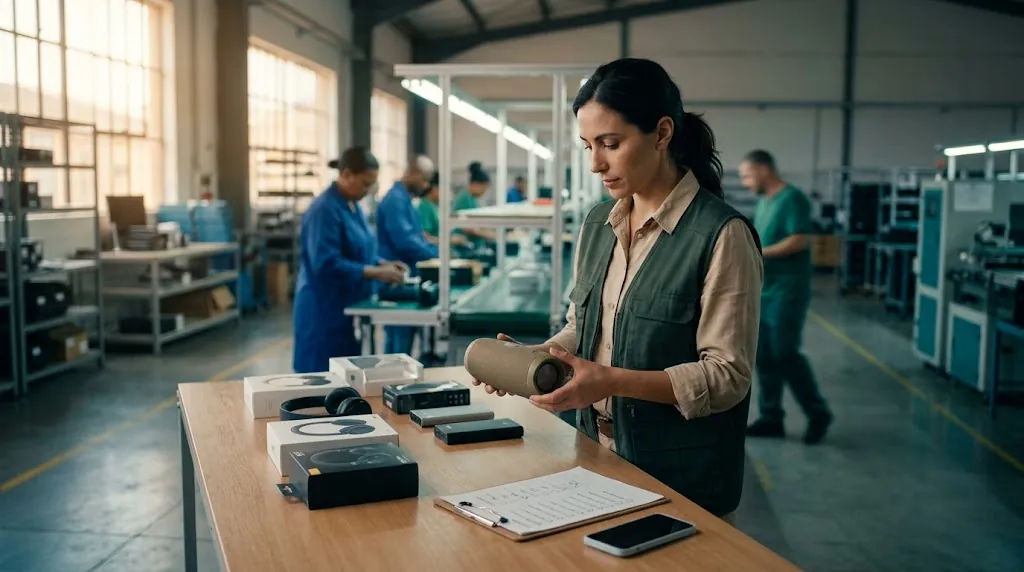
- Step 1: Ask your supplier for the code they export under. Treat it as a starting point, not an answer: factories optimize for their export paperwork, not your import bill.
- Step 2: Search your country’s official tariff database (HTS search for the US, TARIC for the EU, the UK Trade Tariff for the UK) using the product’s material and function, not its marketing name.
- Step 3: Read the chapter and heading notes: classification rules exclude and redirect products in ways the search box does not show.
- Step 4: Compare 2?3 candidate codes and their rates, then pick the one matching material and function. The difference between neighbors can be several percent, or a rules change.
- Step 5: For valuable or ambiguous products, request a binding ruling or written classification opinion from your customs authority. It costs little and locks the answer.
A worked shape: a ceramic mug is ceramic tableware (chapter 69); a stainless steel mug is steel tableware (chapter 73) unless insulated, which moves it again. Same product on a store shelf, three different classifications, three different duty rates.
Where do importers go wrong?
- Using the supplier’s code without checking, then discovering a 25% Section 301 line at entry.
- Classifying by marketing name: a “smart bottle” may classify by its steel body, not its electronics.
- One code for a mixed order: multi-product consignments classify line by line, and consolidated shipments need per-product accuracy.
- Ignoring material composition changes: switching a product from plastic to steel mid-run changes the code, and nobody updated the paperwork.
Duty is only half the border math: VAT or sales tax applies on top in most markets, and some categories need permits or certifications before they even clear. When you buy through us, our sourcing service includes the export-side documentation, and we work with your broker on the import side so the HS data arriving at the border matches the goods in the container. The freight lines that sit next to duty in your landed cost are covered in our shipping comparison and the full cost stack in the landed cost guide.
What do the chapters, headings, and digits in the code mean?
An HS code is a layered address. The first six digits are agreed worldwide by the World Customs Organization, so 6109.10 means the same product category in Shenzhen and in Rotterdam. The digits after that are national. In the United States, the code extends to ten digits under the HTS: the first eight digits set your duty rate, and the last two are statistical categories. When someone quotes you a six-digit code, you know the product family but not yet the rate.
Take a cotton T-shirt as a worked example. Chapter 61 covers knitted apparel. Heading 6109 covers T-shirts and singlets, knitted. Subheading 6109.10 narrows it to cotton. In the US HTS, the full code might be 6109.10.0012, and that tenth-digit detail is where the duty rate actually lives. A polyester version of the same shirt starts 6109.90 and lands on a different rate. Two products that look identical in a photo can sit chapters apart.
A few chapters cover most consumer imports from China, so it pays to recognize the neighborhoods: chapter 39 for plastics and housewares, 61 for knitted apparel, 62 for woven apparel, 64 for footwear, 70 for glassware, 82 for tools and cutlery, 85 for electronics, 87 for vehicles and bikes, 94 for furniture and bedding, 95 for toys. Chapter and section notes can move a product between neighbors, which is exactly why classification is a skill and not a lookup.
What extra charges come on top of duty: MPF, HMF, and Section 301?
If you import into the United States, the duty rate is only the start. Three more lines belong in your math. The Merchandise Processing Fee adds 0.3464 percent of the entered value, with a minimum and maximum that adjust each year. The Harbor Maintenance Fee adds 0.125 percent on ocean shipments. Both apply to nearly every formal entry regardless of product.
Then there is Section 301. Because the goods originate in China, many product categories carry an additional tariff of 7.5 to 25 percent on top of the base HTS rate, organized under the USTR’s exclusion lists. Consumer goods from electronics to furniture are widely covered, which is why two importers bringing in similar products can pay wildly different totals: one classified a product into a covered subheading and the other did not. Your broker screens for 301 coverage during classification, and it is worth asking explicitly, because the answer can swing your landed cost by double digits. Note that origin follows where the goods are made, not where they are shipped from. Routing a container through Vietnam does not change the origin for 301 purposes, and transshipment to dodge tariffs is the kind of shortcut that ends in penalties.
Products with anti-dumping or countervailing duties, known as AD/CVD, sit in a different league of cost and paperwork, with rates that can exceed 100 percent. Categories like certain aluminum foil, mattresses, and wood cabinets are affected. A screening question to your broker before you commit to a product saves you from discovering this after the deposit. The landed cost breakdown shows where all of these lines fit into your unit economics.
When the classification is genuinely ambiguous
Plenty of products have two or more plausible codes, and the difference can be real money. When you hit that, resist the temptation to simply pick the cheaper code and hope. The sequence that keeps you safe looks like this.
- Ask your customs broker for a written classification opinion on your exact product, with materials and function described precisely.
- If two codes remain plausible, request a binding ruling from CBP before your first big entry. The service is free, the ruling protects you going forward, and turnaround is typically about 30 days, sometimes longer.
- For textiles and products where material composition drives the code, a laboratory composition test gives you objective evidence.
- Where ambiguity remains, classify into the higher-duty code for the first entry. You can reclaim the difference through a post-entry correction later, but underpaying first is what triggers penalties.
Keep your paperwork consistent with the code. Invoice descriptions should say what the product is, in plain words that match the classification logic. Descriptions like gift or sample with no value invite inspection, and a supplier invoice that describes a product vaguely enough to fit three codes will fit none of them on the day customs opens a carton. This is also where your sourcing team earns its fee: an experienced agent writes specification sheets that survive customs scrutiny, and coordinates with your broker so the code on the entry matches the product in the container. If you are early in the process, the complete import guide shows where classification sits in the full sequence.
What happens if customs reclassifies your shipment?
Customs can and does reclassify entries. When it happens, you receive a notice, the entry is adjusted, and you owe the duty difference. In the worst cases, penalties are added on top, and repeated reclassifications put your entries under slower, more suspicious review. The pattern behind almost every reclassification is the same trio: a vague invoice description, a code chosen by a supplier who will never pay the duty, and a first-time importer who did not check either. Your name is on the entry, not theirs, which is why the classification decision belongs with you and your broker, informed by real product documentation, never with the factory alone.
FAQ
Who is responsible for the HS code, me or the supplier?
The importer of record owns the declaration. Suppliers can suggest a code, and brokers file it, but a wrong classification on your import is your liability.
Is the HS code the same in every country?
The six-digit core is harmonized worldwide. Beyond six digits, each country extends it, and duty rates are national. Verify the code in the destination country’s own tariff, every time.
Can I change my HS code to pay less duty?
You can and should choose the code that correctly matches your product’s material and function, even when it carries a lower rate. Choosing a lower-rate code that does not match the goods is misclassification, and customs reads it as fraud.
Do samples also pay duty?
Many markets give low-value samples reduced or zero-duty treatment with correct declaration, but “sample” must genuinely describe the goods. Express couriers handle most of this paperwork within their clearance.
Related guides
- How to calculate landed cost from China
- Incoterms explained: EXW, FOB, DDP
- Shipping from China compared: air, sea, rail, express
- How to import from China: the complete 2027 guide
Written by the Yinhan Sourcing team: our shipping desk prepares classification-ready documentation for every consignment.